![econlifelogotrademarkedwebsitelogo[1]](/wp-content/uploads/2024/05/econlifelogotrademarkedwebsitelogo1.png#100878)


Just Ask Jenna Looks at Salaries
April 9, 2026
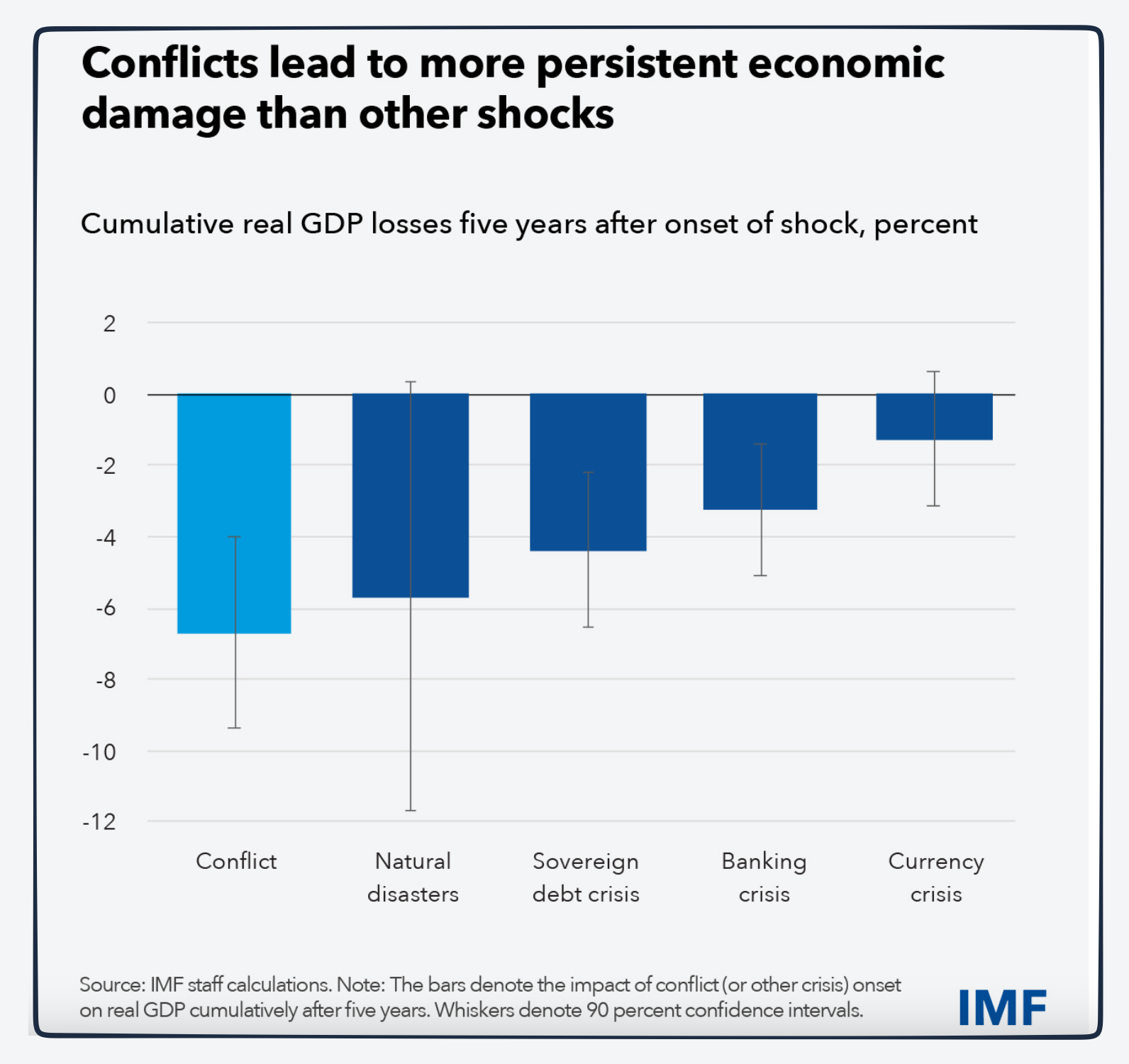
The IMF estimated how much economic activity shrinks in a country directly hit by a war.
Telling us that wars are worse than financial disasters, they estimate that a wartime contraction initially is 3% and then, after 5 years, the plunge goes down to 7%:
Continuing, in a recent blog and a much longer report, the IMF details the prevalence and impact of war.
Impact of War
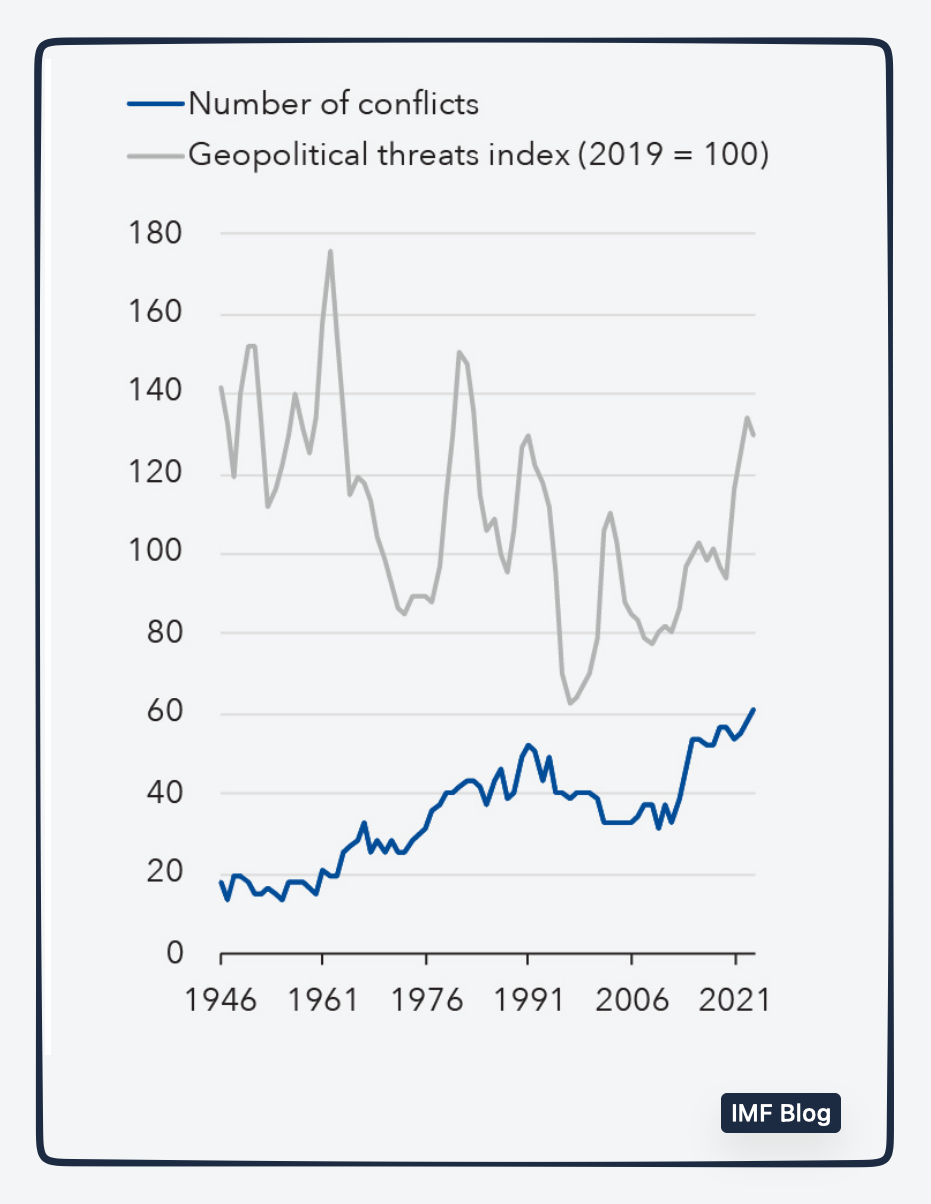
Number
The number of conflicts is on the upswing:
And so too is their cost:
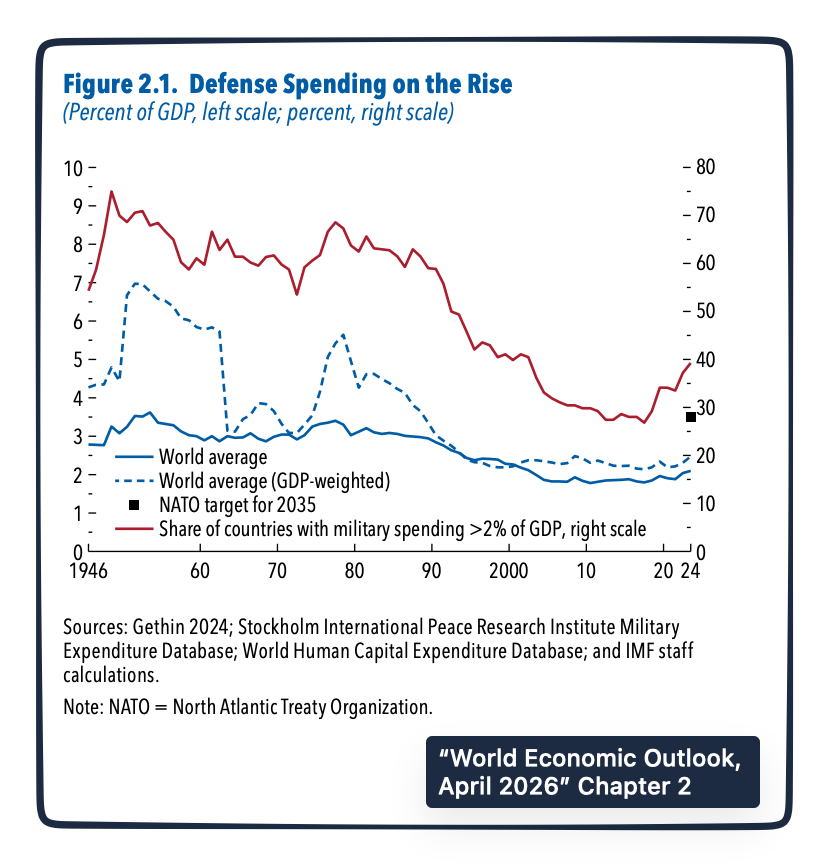
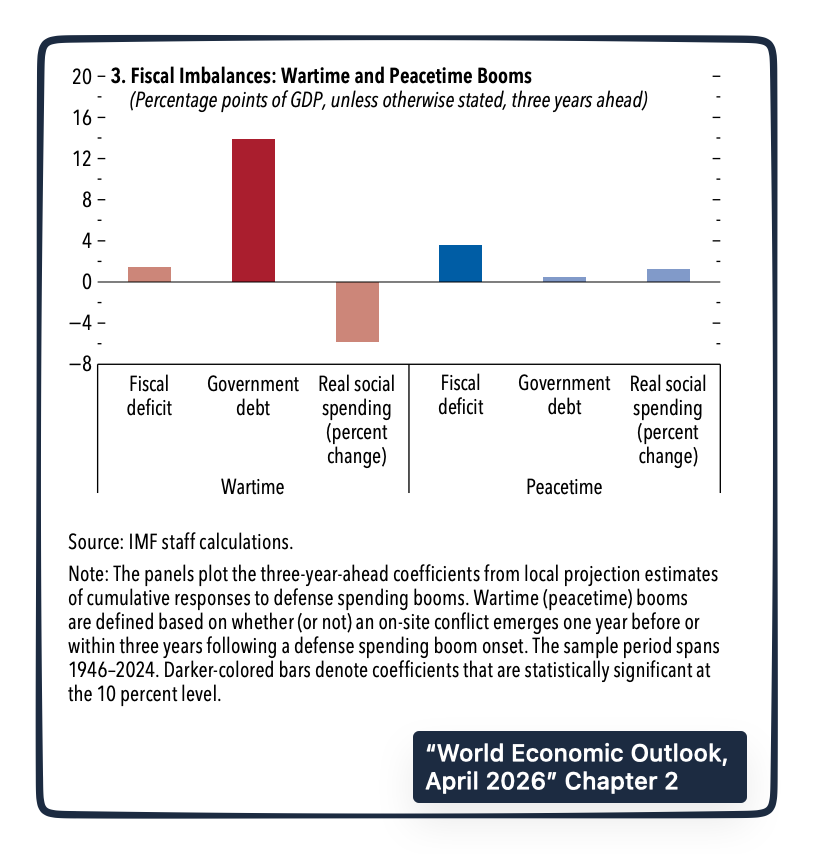
However, the results vary because it all depends on whether the spending occurs during wartime or peacetime:
Our Bottom Line: Tradeoffs
To see actual defense spending tradeoffs, we can look at President Trump’s FY2027 budget proposal.
The Washington Post reports that defense spending, up by 42.2%, would be a gob smacking $1.5 trillion. On average, the cuts to nondefense spending are close to 10%.
While defense spending is way up, much smaller amounts (but gargantuan proportions) of discretionary spending are down. For example, the 19% USDA cut equals $4.9 billion while the EPA’s 52% cut is $4.6 billion: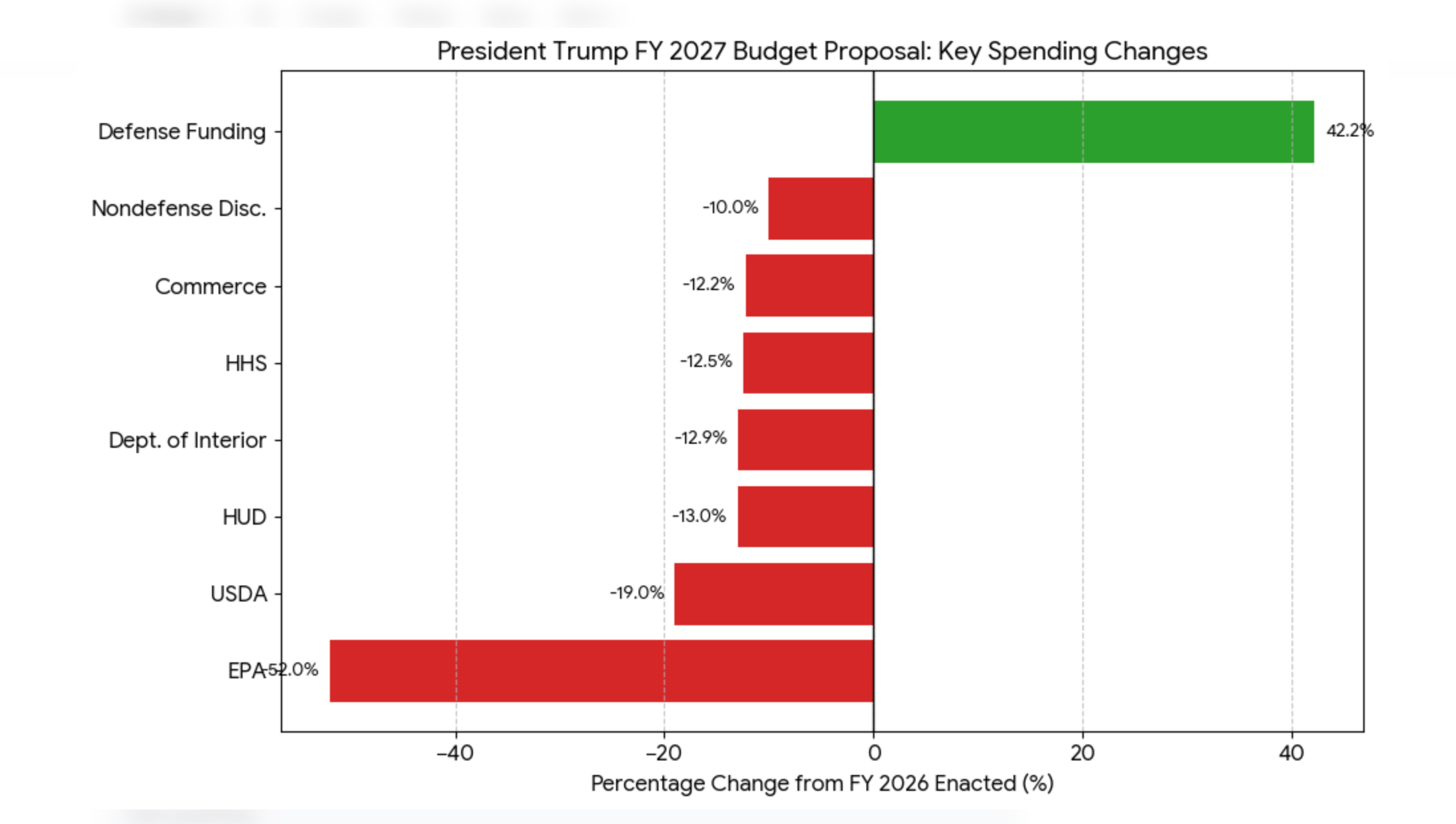
Below, the $350 billion amount was added to the $1.5 trillion for defense. In addition, the mandatory spending that includes Social Security and Medicare have no structural changes that prevent their trust funds’ insolvency:
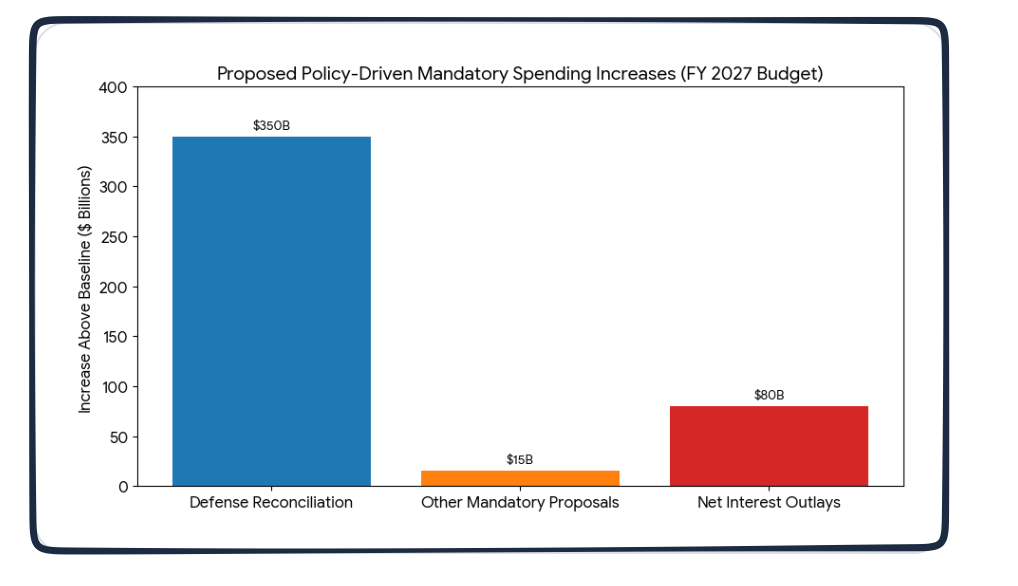
However, more borrowing necessitates an elevated net interest expense.
So where are we?
We have two tradeoffs:
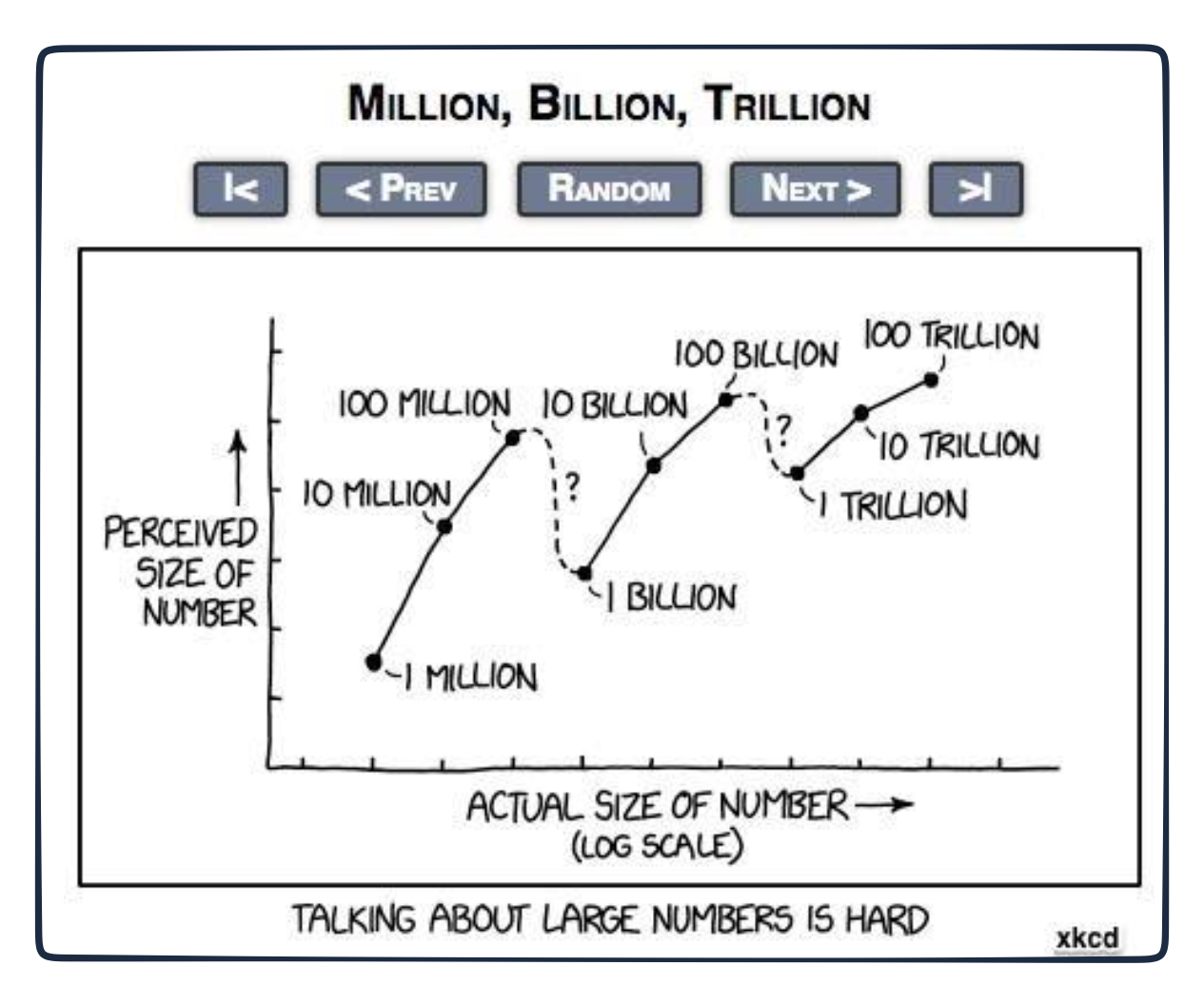
1. The first tradeoff is the unequal dollars. The defense increase is not close to the program cuts since, for example, we have to multiply the $4.6 billion EPA cut by 326 to equal the defense total of $1.5 trillion.
Or, as xkcd said:
2. And finally, our peacetime pop in defense spending actually might boost GDP. However, the tradeoffs could make economic growth less appealing.
My sources and more: Thanks to my IMF email for inspiring today’s post. For the facts, their blog and this IMF report were ideal. Please note that I used AI to generate my “Bottom Line” graphs. But I did check its numbers in this Washington Post article and through Inside Defense.