![econlifelogotrademarkedwebsitelogo[1]](/wp-content/uploads/2024/05/econlifelogotrademarkedwebsitelogo1.png#100878)


Our Weekly Economic News Roundup: From Burgers to Cookies
March 14, 2026
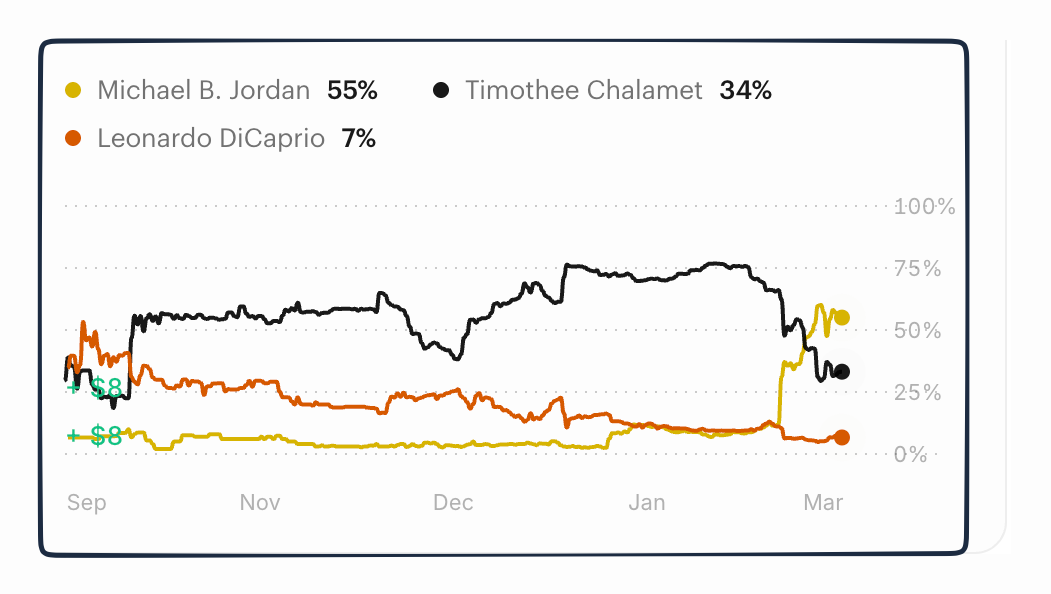
According to Kalshi, the Oscars best actor betting market flipped to Michael B. Jordan from Timothée Chalamet on March 7th:
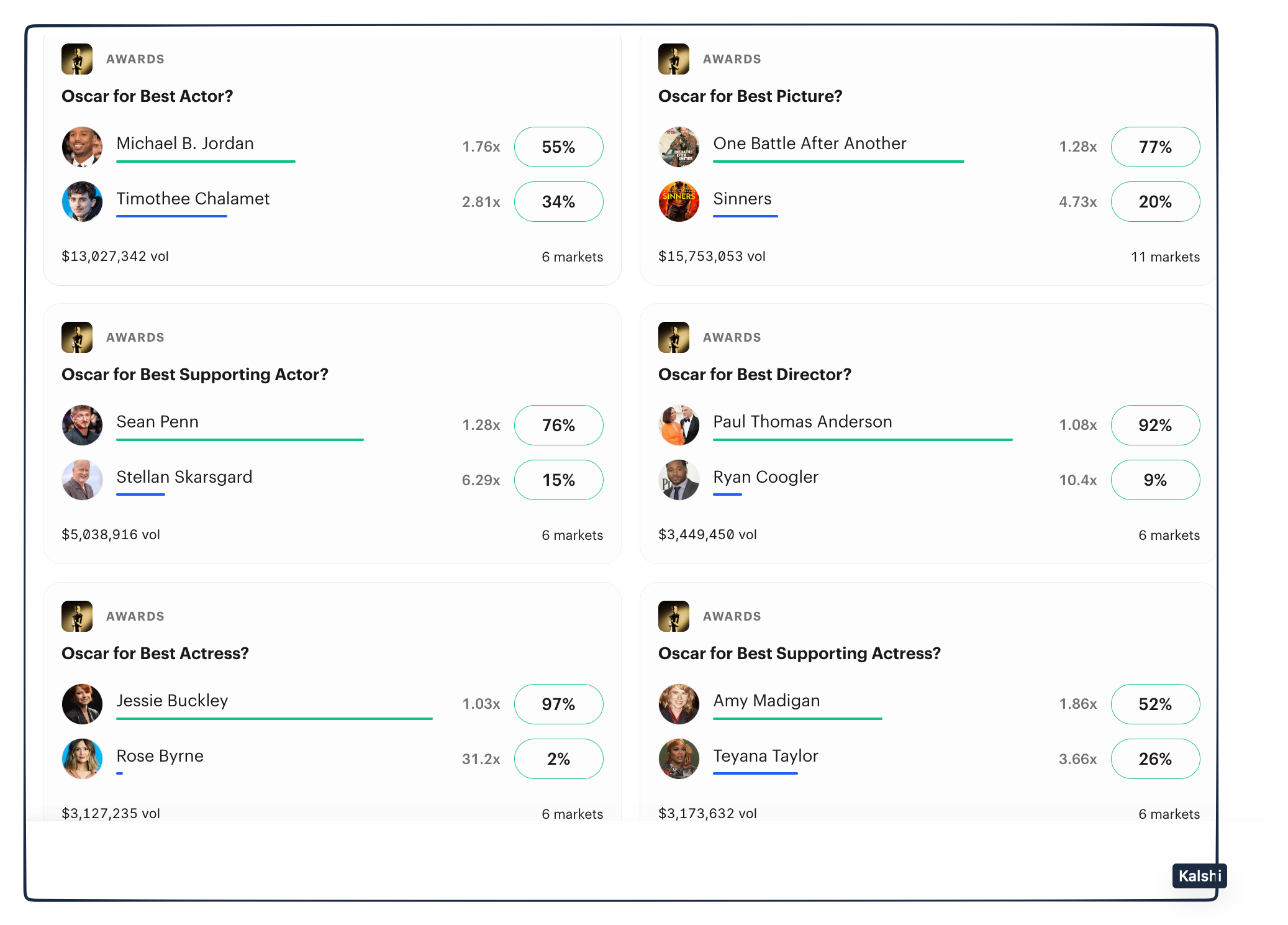
Last night, Kalshi markets also suggested the following winners:
“The Wisdom of Crowds”
In The Wisdom of Crowds, New Yorker columnist James Surowiecki says that crowds can make decisions that are more accurate than individuals. In markets, crowds accurately price sodas and broccoli and tennis lessons. Studies demonstrate also that crowds’ guesses cluster around the true number of jelly beans in those huge glass jugs.
Surowiecki divides “collective intelligence” into 3 categories: cooperation problems, coordination problems, and cognition problems.
Cooperation
Cooperation problems focus on how people work together. The issues they look at include legislative compromise (or gridlock) and getting a large group together for a dinner.
Coordination
Coordination problems display how many independent individuals impersonally coordinate their behavior. Examples would take us to rush hour traffic and stock markets.
Cognition
Cognition problems involve information that makes one answer more accurate than another. Predicting future monetary policy, the future weight of an ox, and who will win the Oscars are cognition problems.
I wonder if Kalshi combines coordination and cognition.
Our Bottom Line: Betting Markets
Kalshi’s betting markets are all about supply and demand. Describing their pricing mechanism, they start with the “collective sentiment” that creates YES and NO outcome prices. Expressed as a percent, the collective sentiment (probability) of the outcome at that minute ranges from 0% (not happening) to 100% (definitely yes). So, when the market’s participants think an outcome is less likely, NO will have a higher value while more positive sentiment makes a YES more expensive. NO gets that higher value because there is more demand for NO. Similarly, the price of YES rises when its demand shifts to the right.
A Kalshi hypothetical example tells us that when we pay 70 cents for a YES contract, there is a 70% chance of the outcome occurring. At the same time, the wager is matched with a NO that pays 30 cents. Together they equal a dollar that gets contributed to the market. As a result, as of yesterday evening, a YES contract for Michael B. Jordan would have cost approximately 55 cents.
Returning to The Wisdom of Crowds, this CEPR article said we still are not sure if Kalshi demonstrates the wisdom of crowds.
My sources and more: Kalshi had most of the information about their markets while VOXeu CEPR added the clarifying we needed. Then, this NY Times article had more detail about the Oscars.
Please note that several of today’s sentences were in a past econlife post.