![econlifelogotrademarkedwebsitelogo[1]](/wp-content/uploads/2024/05/econlifelogotrademarkedwebsitelogo1.png#100878)


Just Ask Jenna Looks At Overspending
February 26, 2026
February 2026 Friday’s e-links: A Mystery Recommendation
February 27, 2026
The Wall Street Journal tells us that a conservative economist placed a $342,195.63 prediction-market wager. Betting against Elon Musk successfully cutting the deficit, his “gamble” paid off with a $128,000 profit.
He knew spending could not plunge and revenue would not soar.
So do we.
Debt and Deficit Reduction
Intertwined, the debt is the total amount owed by the federal government while the deficit is an annual amount by which spending exceeds revenue.
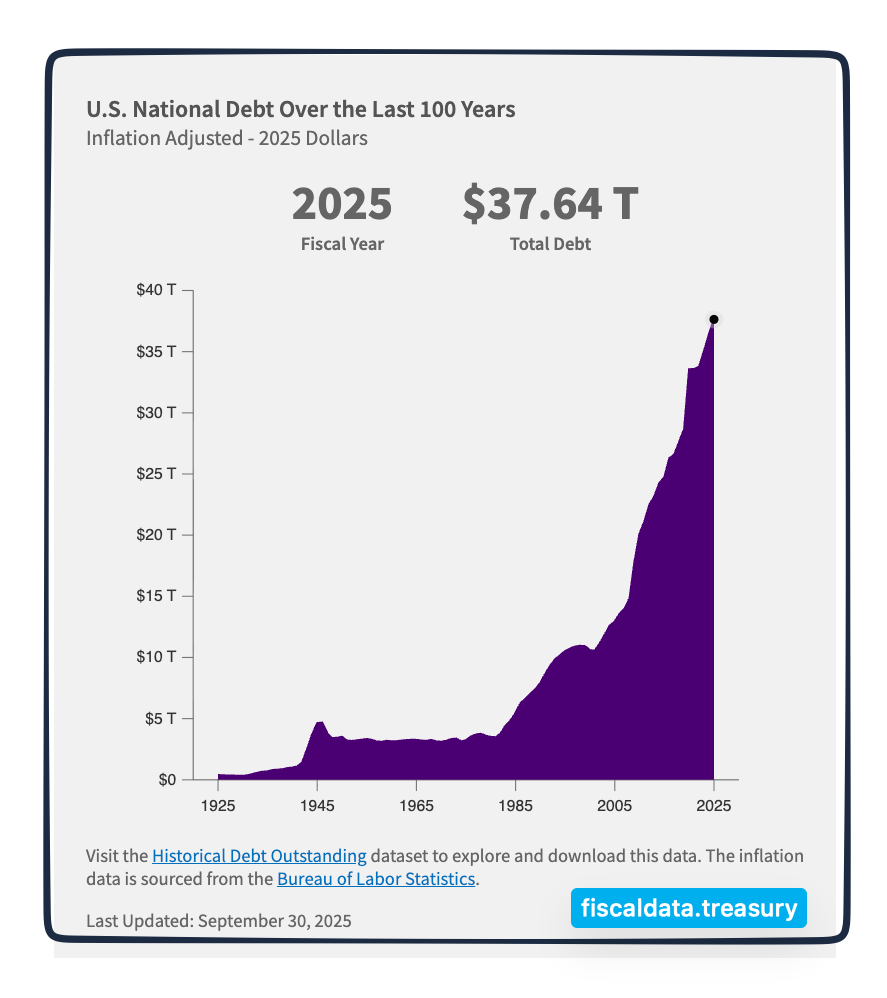
1.The debt has steadily marched upwards.
During the past century, the debt ballooned to $37.64 trillion from $380 billion:
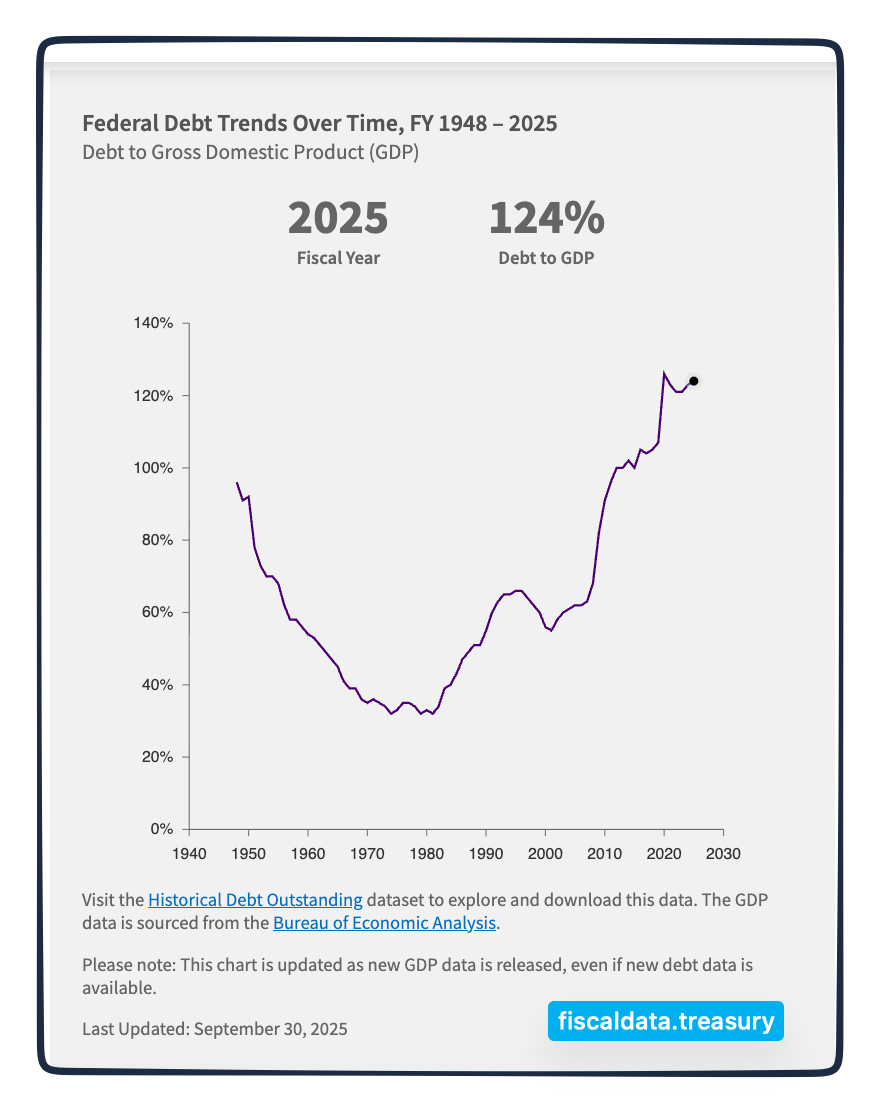
2. So too has our debt to GDP ratio.
After all, an affluent nation can sustain a large debt. Instead we need a benchmark. One possibility is comparing the shortfall to the GDP. Then though we also see an inexorable climb to new highs:
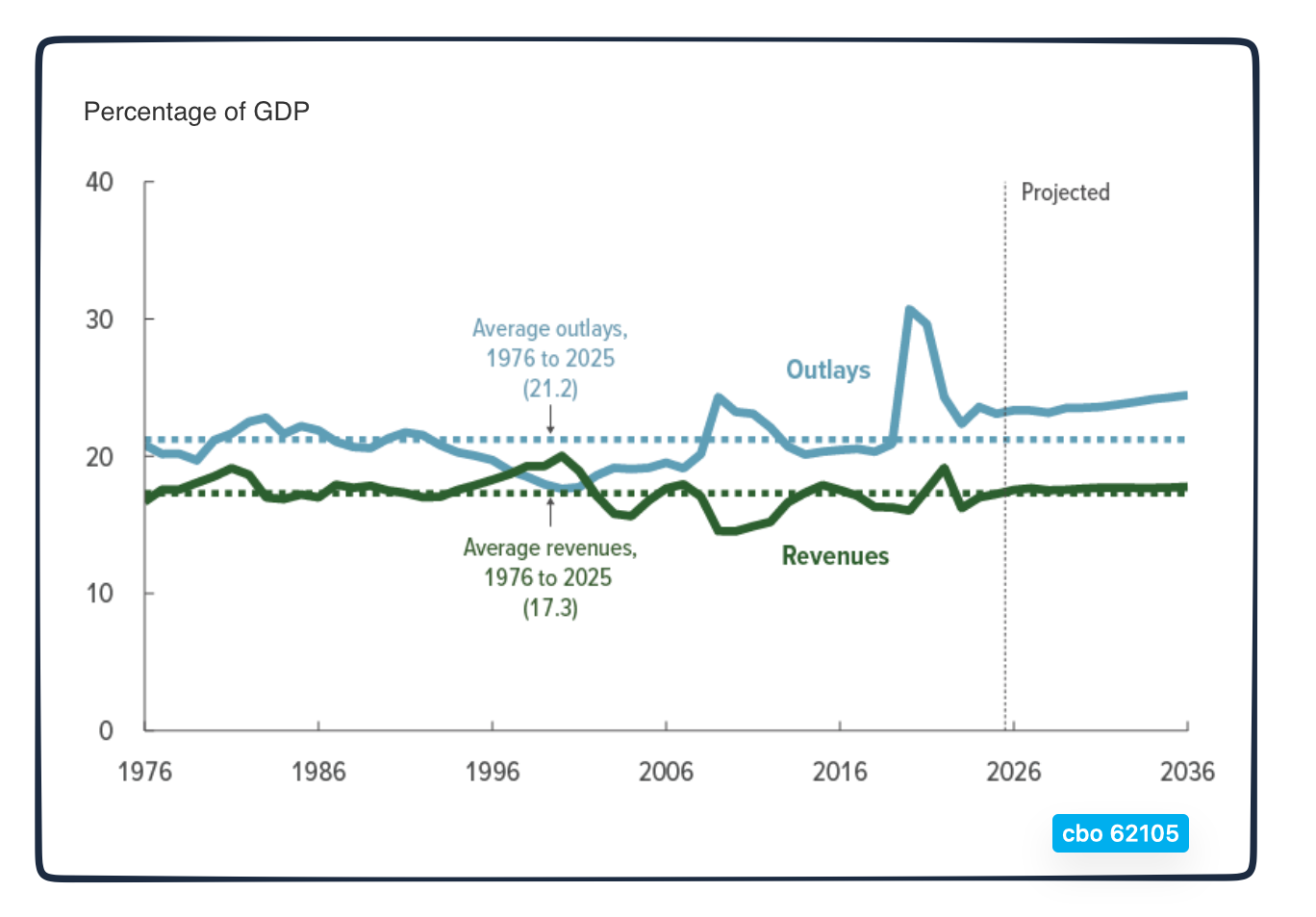
3. In addition, revenue will not catch up with spending.
The gap is pretty steady:
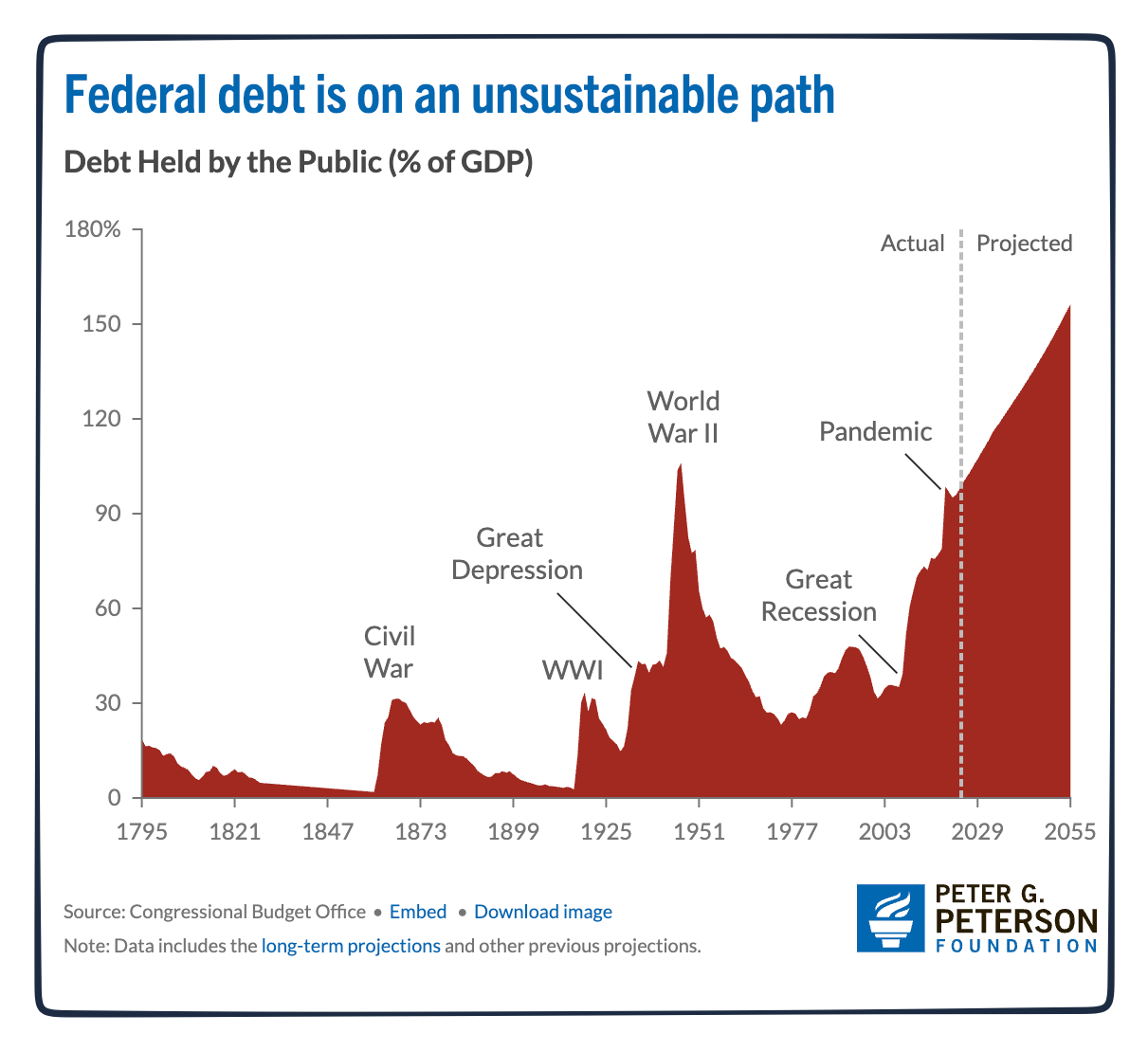
4. Consequently, we have to borrow more.
More borrowing increases the budget’s net interest expense:
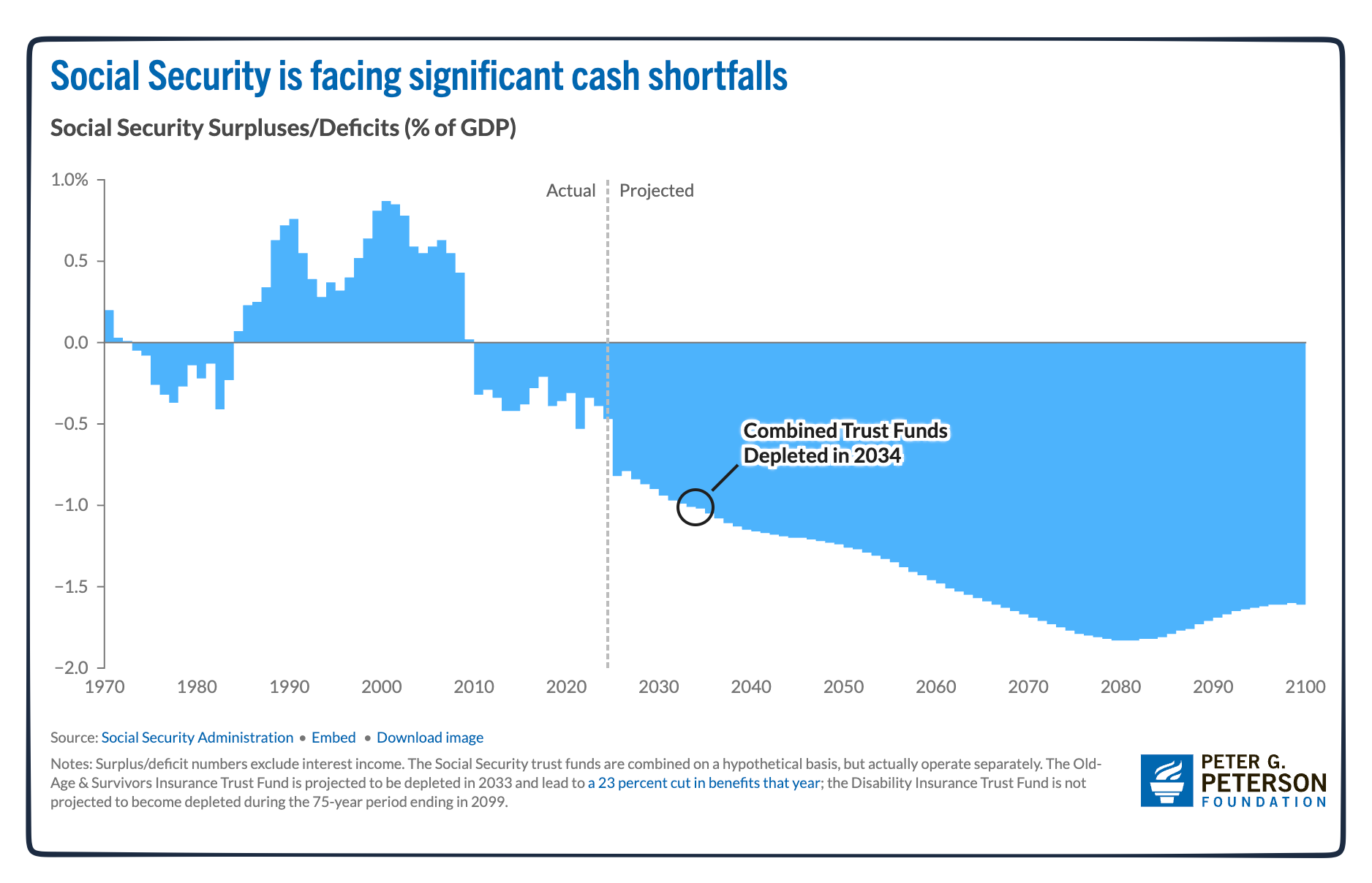
5. Making it even worse, Musk was not going to get help from Social Security.
As a pay-as-you-go program, Social Security relies on current workers funding the program’s recipients. Recently, those workers were not able to cover the revenue needs of the program:
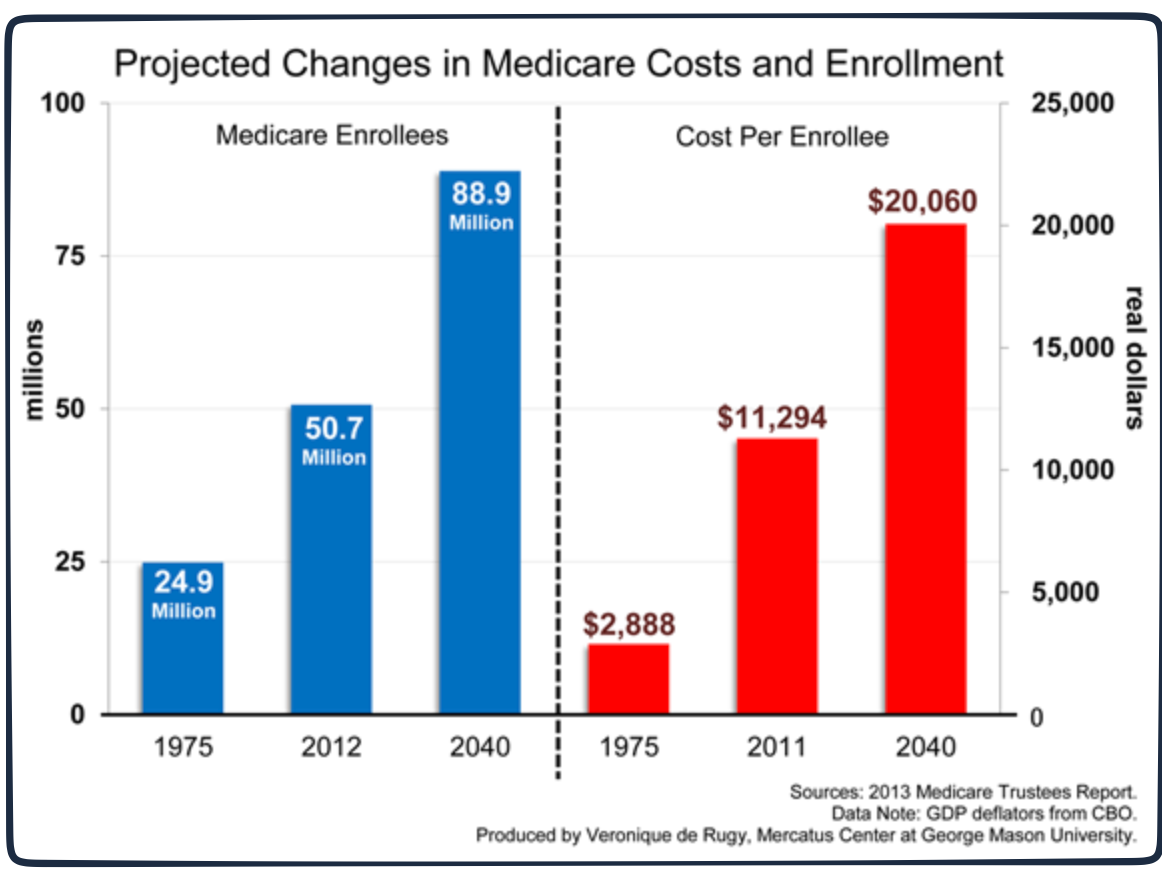
6. Or Medicare.
Similarly, Medicare also has revenue concerns:
Our Bottom Line: Federal Spending Categories
Looking at the federal budget’s five largest spending categories, we can see why Musk had to flop.
Three of the top five –Social Security (22%), Medicare (16%), and Health (14%)–compose a hefty chunk of the mandatory slice of the federal budget. Close to a whopping 62% of spending, the mandatory categories cannot be touched unless the laws change. And to make it even worse, Social Security and Medicare will be unable to cover all of their obligations during the next decade. So they will need more money or tweaked recipients:
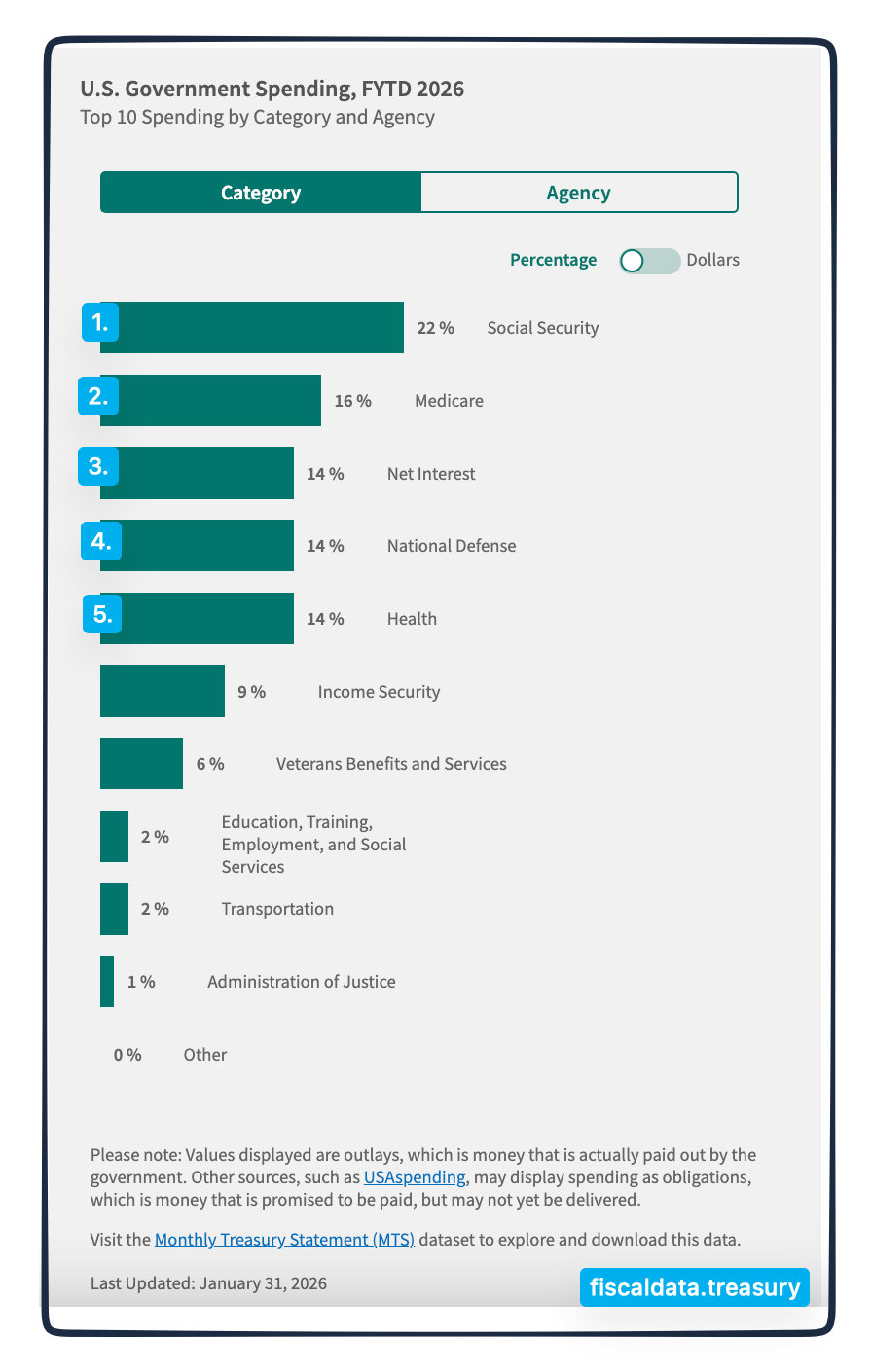
That means we are left with a relatively small portion of the budget that can be cut. Called discretionary spending, that includes the smaller bars on our graphic. It takes us to our highways, education programs, the court system. Consequently, even when we cut the “waste,” it is a tiny part of what we spend.
My sources and more: Thanks to WSJ for inspiring today’s post. From there, as a source of data for government spending, this U.S. Treasury site is ideal. Then, a brand new CBO report on the debt and the deficit was the perfect complement. And, it was also helpful to read this Peter G. Peterson Foundation Report.