![econlifelogotrademarkedwebsitelogo[1]](/wp-content/uploads/2024/05/econlifelogotrademarkedwebsitelogo1.png#100878)


Looking at Valentine’s Day in an Economic Way
February 15, 2026
Which Olympic Figure Skaters Had Music Worries?
February 17, 2026
Through Learning Resources v. Trump, a group of small and medium size businesses want the Supreme Court to declare the illegality of the Trump tariffs. Contrary to what the President claims, the plaintiffs say that IEEPA (the International Emergency Economic Powers Act of 1977) does not give the tariff power to the President.
Impact of Trump Tariffs
Thinking of the tariff case, we should imagine Botley, the Coding Robot. Manufactured by toymaker Learning Resources with parts from Asia, Botley (and others like it) has been the source of the billions of tariff dollars deposited in U.S. coffers. Unable to avoid the tax, Learning Resources tells us that U.S. companies don’t want to make its toy-grade electronic components.
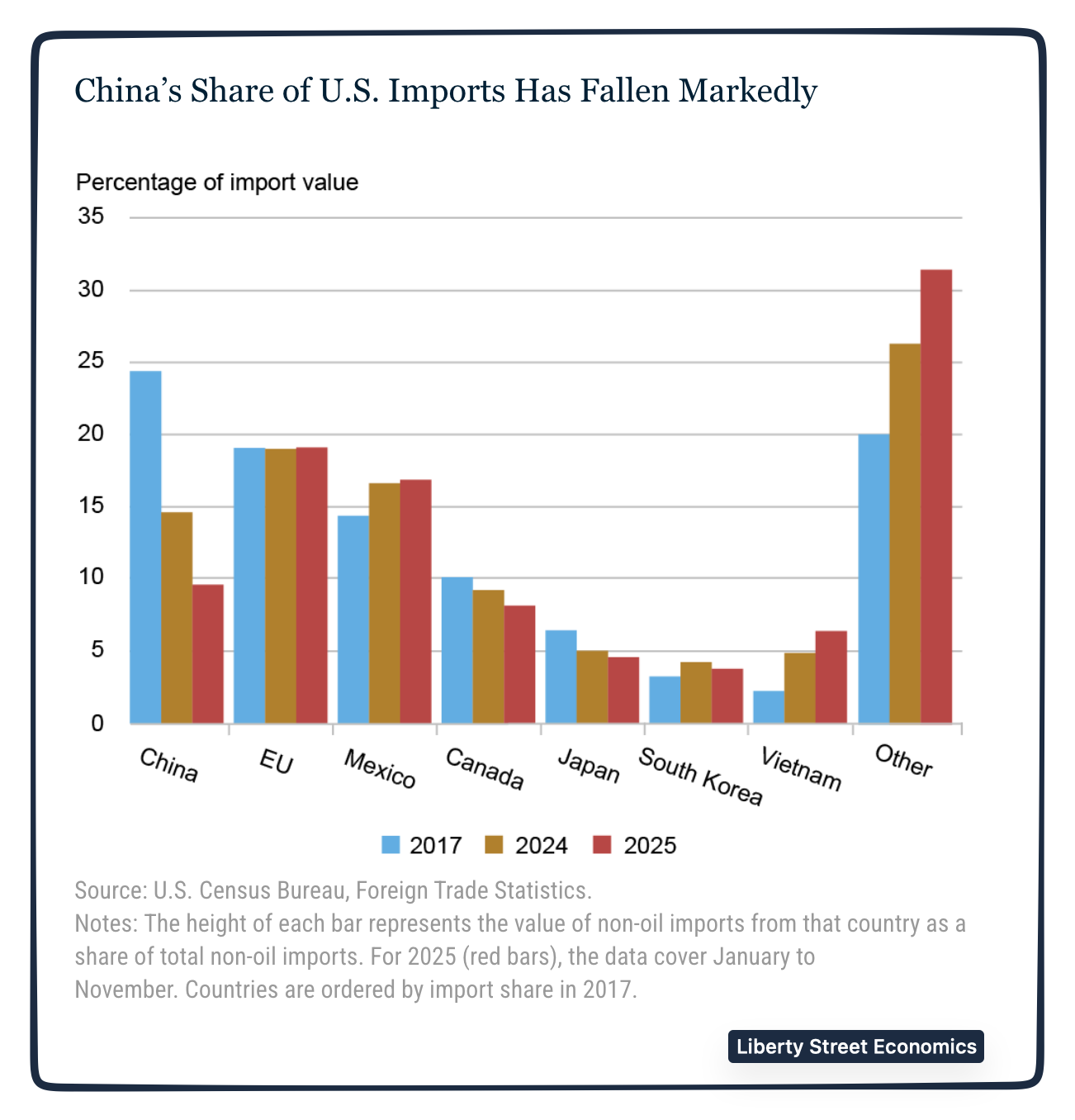
In a recent paper, the NY Fed confirmed how tariffs affect Learning Resources (and firms like them). Averaging 13% but spiking beyond 100%, tariffs incentivized firms to move supply chains away from China. However, according to smaller enterprises, the shifts come from the larger firms that have more flexibility and money:
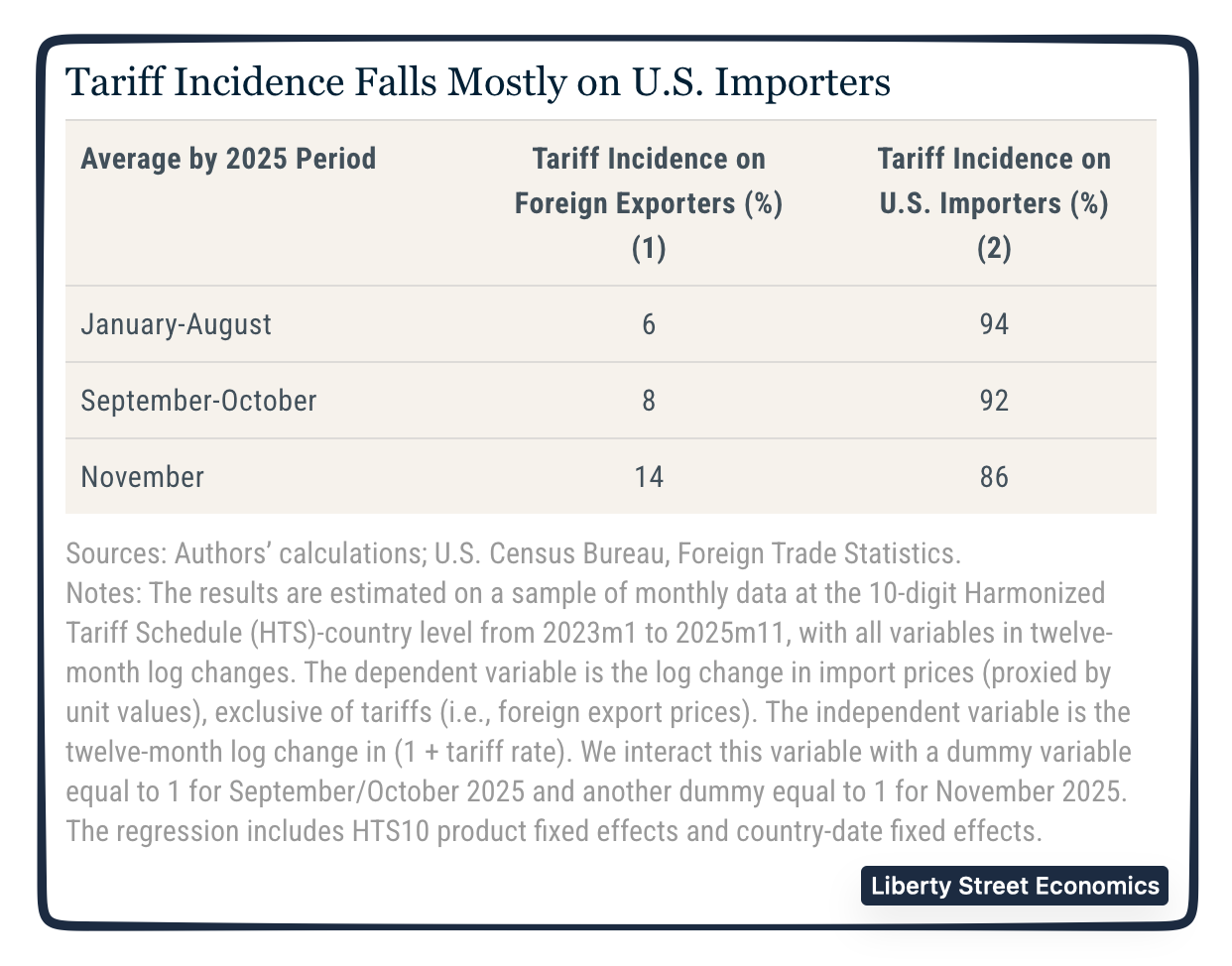
In addition, importers like Learning Resources pay a whopping 94% of the tariff. Correspondingly, the Chinese exporters that produce the parts for their toys absorb a tiny slice of the tariff buden:
Our Bottom Line: Perverse Incentives
You can see why most economists dislike tariffs. Whether it’s toys or wine or a slew of other goods and services, tariffs distort the decisions made by markets. They change what businesses are willing and able to produce and what consumers want to buy. By elevating costs, tariffs change production decisions and diminish efficiency.
More specifically, they encouraged Learning Resources to cancel its expansion plans. No longer will they add 30 new employees or build a larger warehouse. Similarly, toymaker MicroKits had to shrink the work done by its assembly plant in Virginia and the wine distributor in the tariff case said it has $200,000 less in profits to invest.
My sources and more: Thanks to the NY Fed’s Liberty Street Economics for the springboard that launched today’s post. Then, the perfect complement, Reuters detailed the Supreme Court tariff case.
Please note that several of today’s sentences were in a past econlife post.