![econlifelogotrademarkedwebsitelogo[1]](/wp-content/uploads/2024/05/econlifelogotrademarkedwebsitelogo1.png#100878)


Our Weekly Economic News Roundup: From Less Wine to More Cats
January 24, 2026
When the Cost of a Snowstorm Is Money and More
January 26, 2026
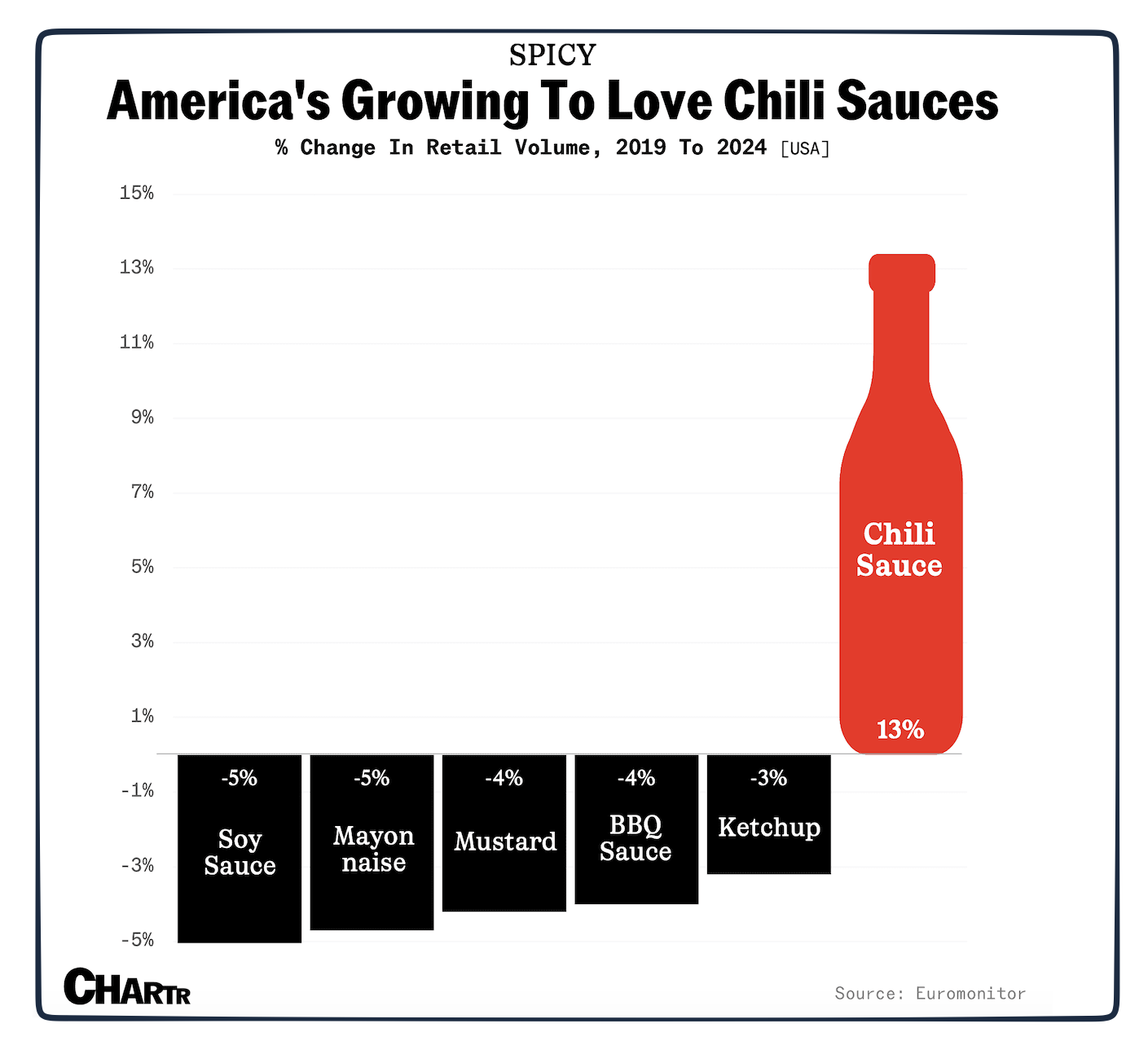
More and more, we like our hot stuff.
Among the sauces that Euromonitor tracks, chili sauce is the one group that grew:
Hot Sauce Trends
As we’ve upped our consumption of Asian, Latin, and African cuisine, so too has our tolerance for spice. Correspondingly, Frito Lay’s Flamin’ Hot ranks #1 in spicy salty snacks.

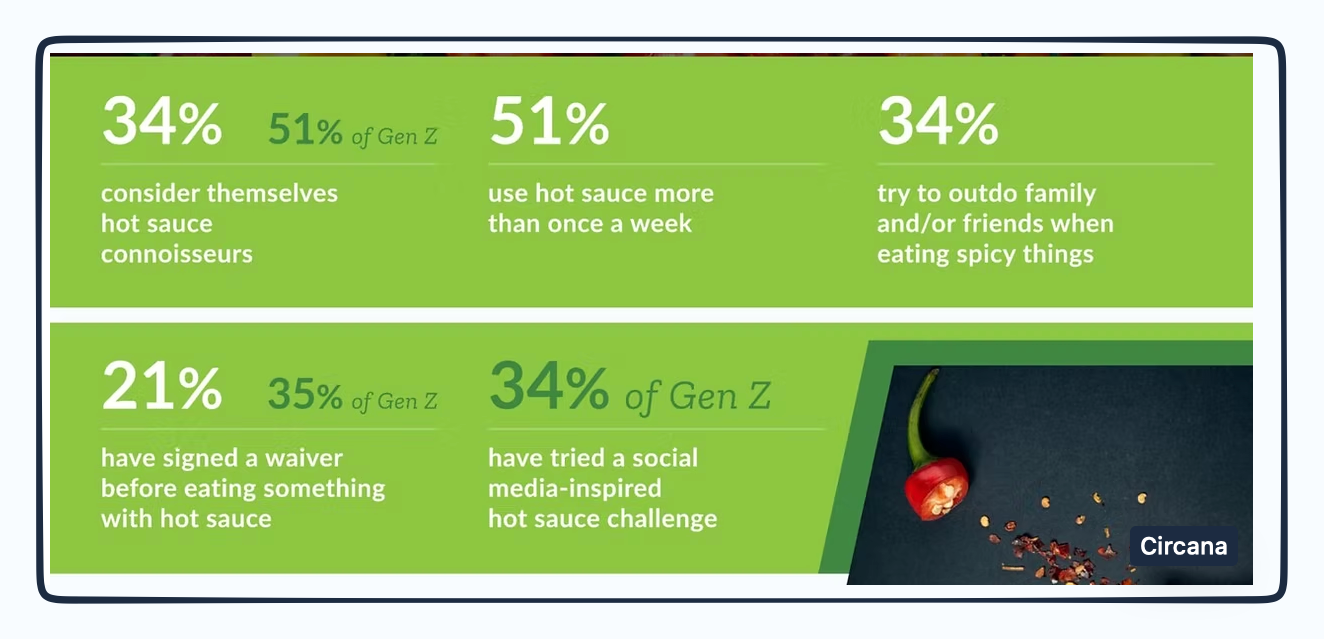
In a thousand person survey more than half of the Gen Z participants said they were hot sauce connoisseurs:
The Scoville Heat Unit (SHU)
The year was 1912 and the firm was Parke-Davis. As one of their pharmacists, Wilbur Scoville was asked to determine the pungency levels of ingredients used for medical ointments. Responding, he developed the Scoville Heat Unit (SHU).
Scoville used five tasters and watered down capsaicinoids (the source of pungency in chili peppers) to develop his heat scale. By increasingly diluting the capsaicinoids until three of the tasters no longer detected any heat, he could create a water-capsaicin SHU (Scoville Heat Unit) ratio. The higher the SHU, the hotter the pepper.
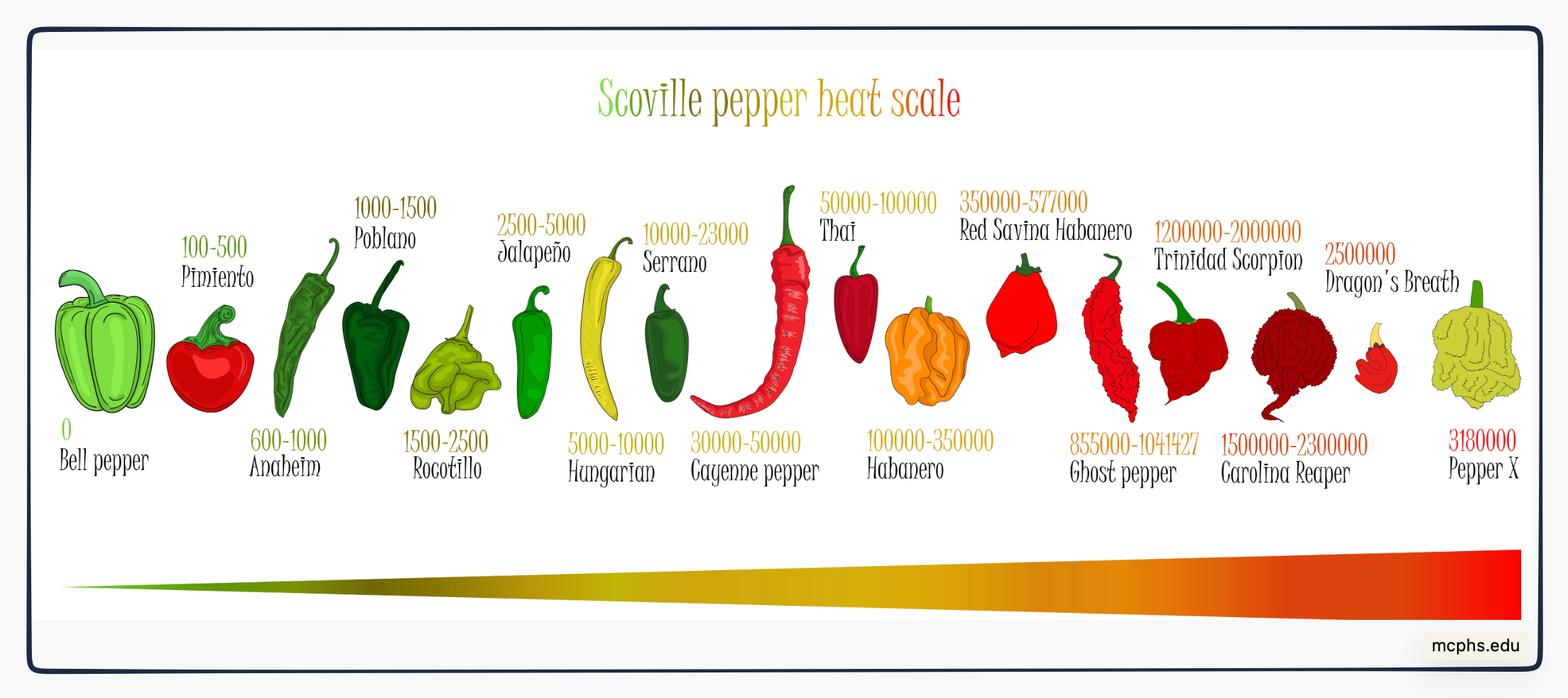
Below you can see that a bell pepper is rather tame while chilis as potent as the Carolina Reaper require an ambulance:
Our Bottom Line: Standardized Weights and Measures
The tale of the Scoville Scale is really about our market’s need for standardization.
Looking back to 18th century France, you can see why commerce needs standardization. Between villages, the size of a pint could have varied by 20 percent. And that was just one metric. Imagine dealing with many when buying and selling merchandise.
It helped the market considerably when two scientists defined the size of a meter during the 1790s by calculating the distance from the North Pole to the Equator and dividing it by 10 million. Once they knew the size of a meter, they said the kilogram was “a cubic decimeter of rainwater at 4 degrees Celsius.” One result was a platinum kilogram cylinder. But the bigger impact was the standardization of a wide array of weights and measures.
To trade beyond your hometown, you need a shared standard for your weights and measures. When you say something weighs a kilogram, or is as long as a yard, everyone needed to know precisely what you meant.
Today in the U.S., NIST (National Institute of Standards and Technology) is the place to go for a measurement standard. Whether you want to know the duration of a second or the length of an inch, NIST has it.
Preserved in a vault, this was the standard kilogram until November 2018 when a formula that includes the speed of light and Plancks constant replaced it:

From: National Institute of Standards and Technology
We could say that NIST returns us to why we need the SHU.
My sources and more: Thanks to my Sherwood News email for inspiring today’s post. From there, we checked a Circana hot stuff study and found the history of Wilbur Scoville. And, for a fascinating update on the kilogram, do read this Wired article.
Please notes that several sections from today’s econlife were in a past post.