
Why Amazon’s Drone Deliveries Are Debatable
November 17, 2026
Delighted, I discovered this connection between Target and fertilizer on the website Spurious Correlations:
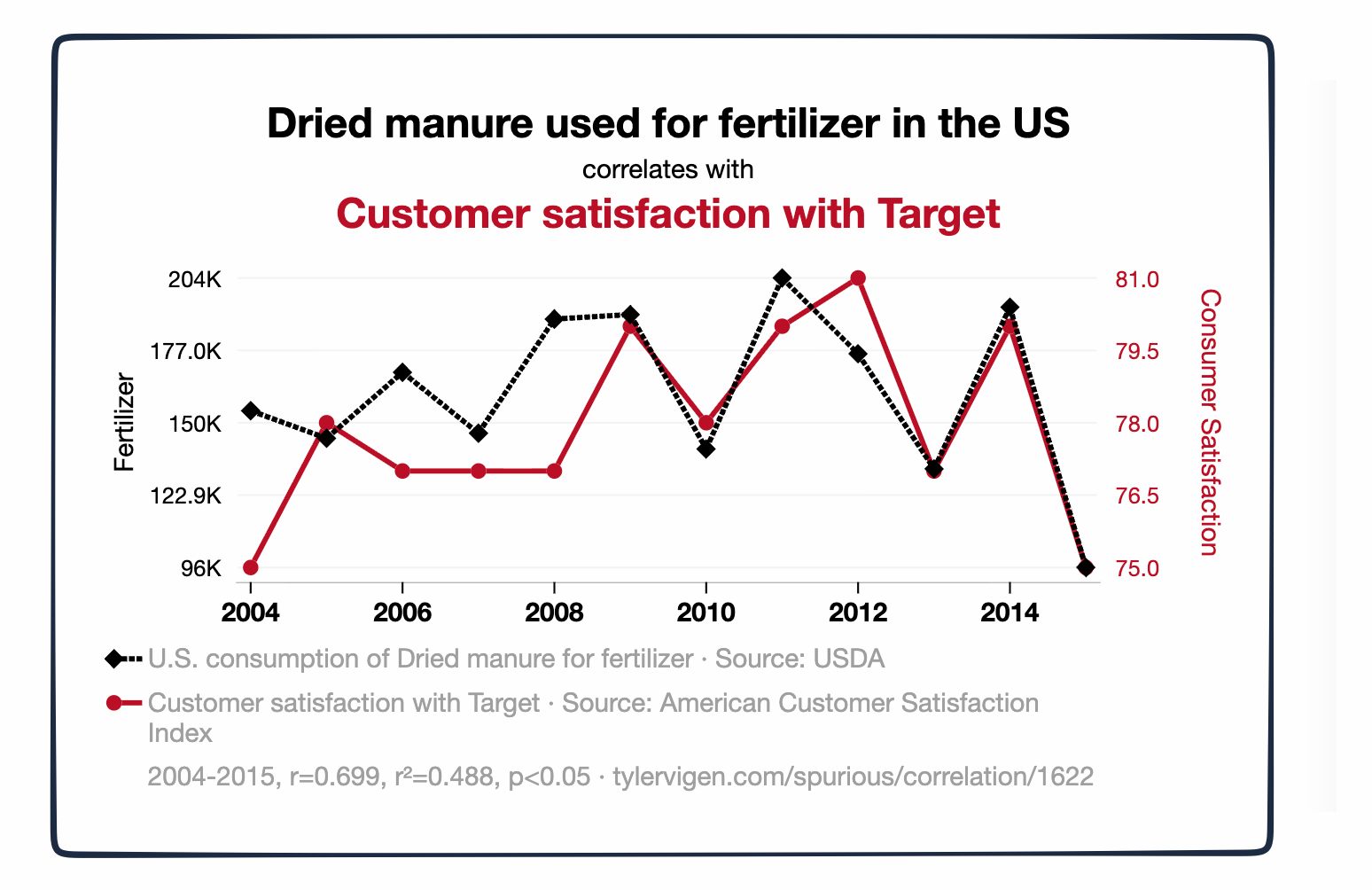
Having thought that today we would look at what Starbucks can signal, I soon discovered we were really talking about correlation or causation. So let’s start with Starbucks and then return to our bigger idea.
What Starbucks Can Signal
Politics
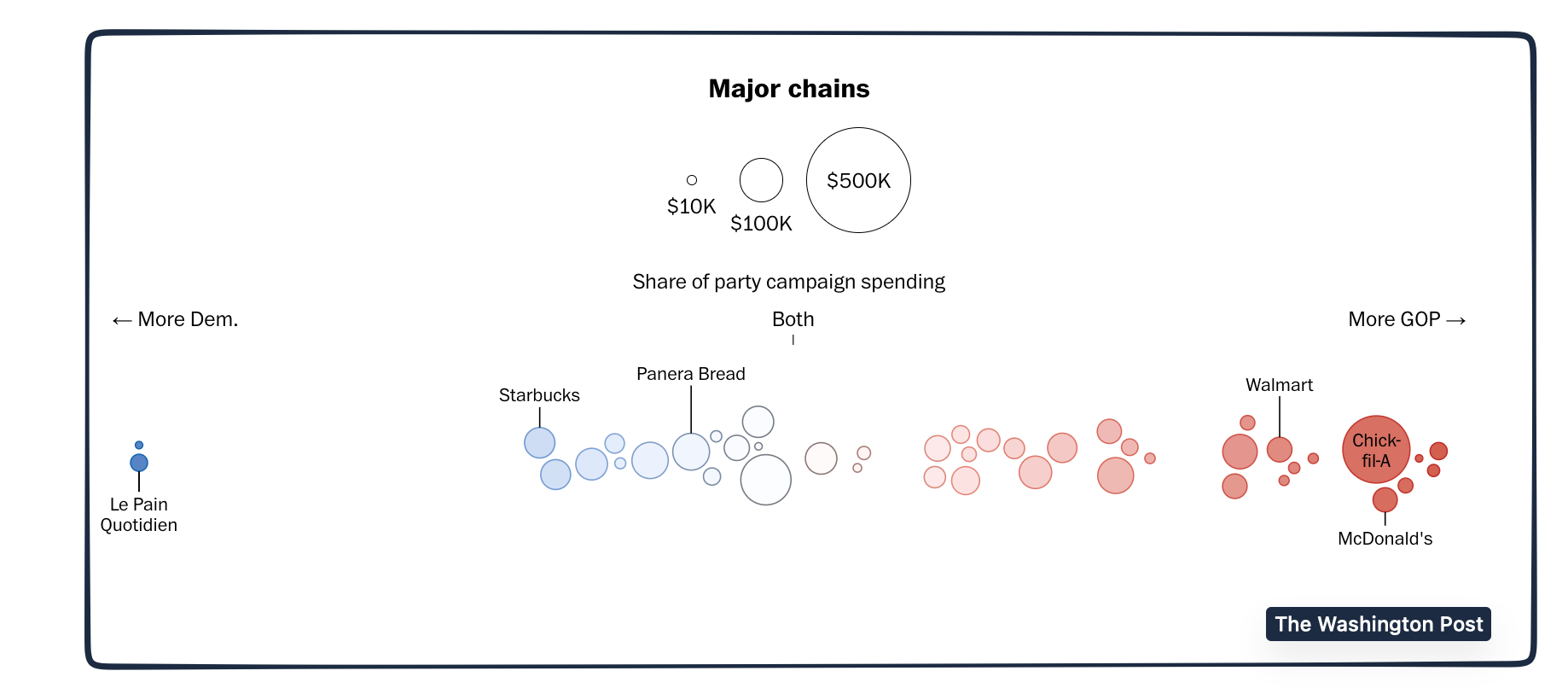
Between January 2023 and October 2024, the Trump campaign spent 86% of the dollars received by McDonald’s by federal candidates. While further research revealed that McDonald’s is relatively non-partisan, still, at an 18-to-1 ratio, GOP campaigns outspent the Democrats for fast food.
As we might suspect, you can see that Starbucks tilts toward the Democrats:
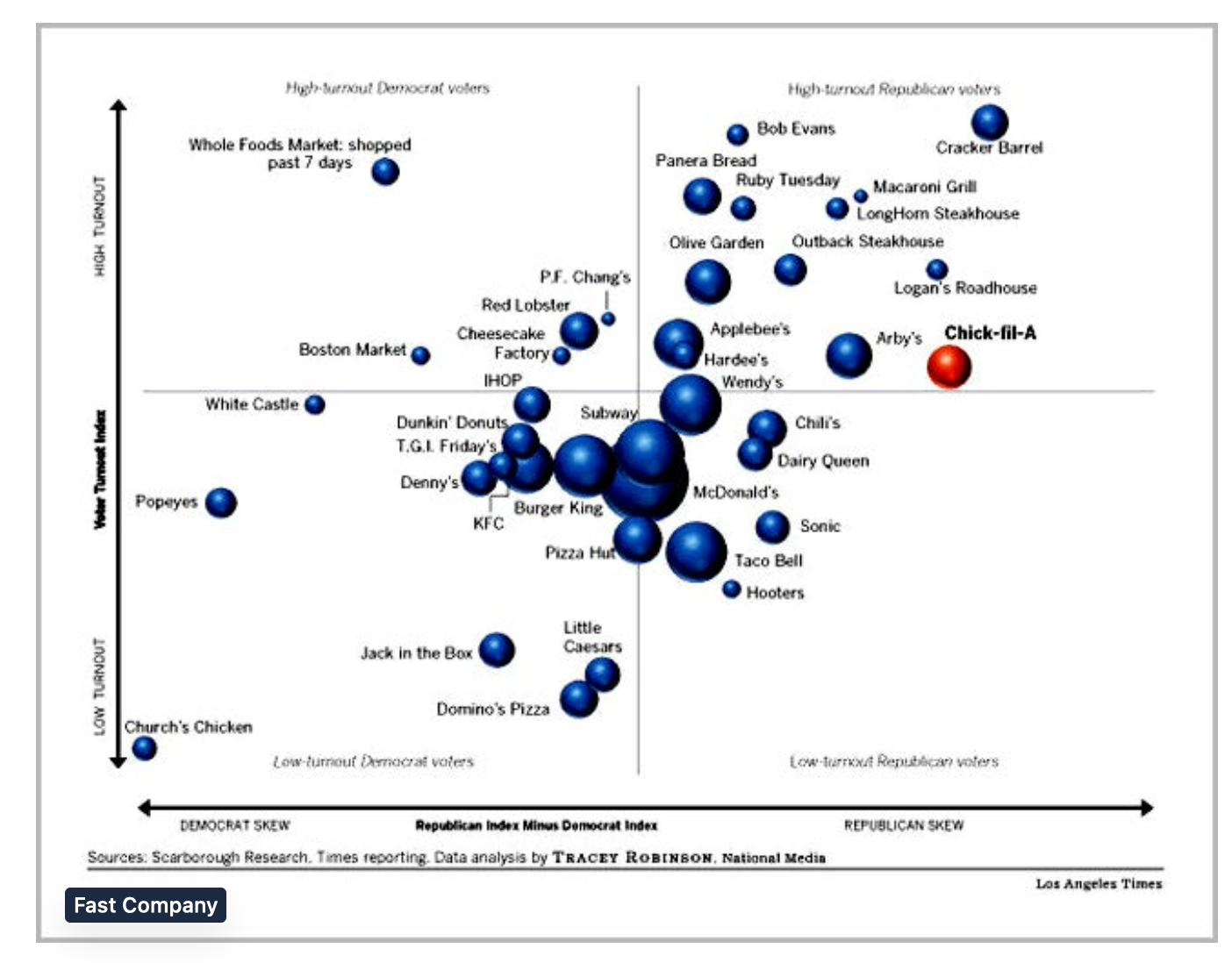
And this 2012 graphic from the LA Times shows us that Starbucks was not alone:
In other ways also, Starbucks tells a story that takes us beyond coffee.
Gentrification
Called the Starbucks Effect, Starbucks stores link to ascending home prices. According to Harvard economist Edward Glaeser and his colleagues, Starbucks does indeed show up in neighborhoods that are becoming more affluent. More precisely, he calculated that each new Starbucks in a zip code was accompanied by a .5% housing price increase. Also, checking college degrees, race, and people aged between 25 and 34, they tried to uncover the Starbucks (and vegetarian restaurant, bars, grocery store, hair salon) connection. He suspects, though, that rather than causing the phenomenon, Starbucks astutely chooses its locations.
The AEA gave us a summary of their data:
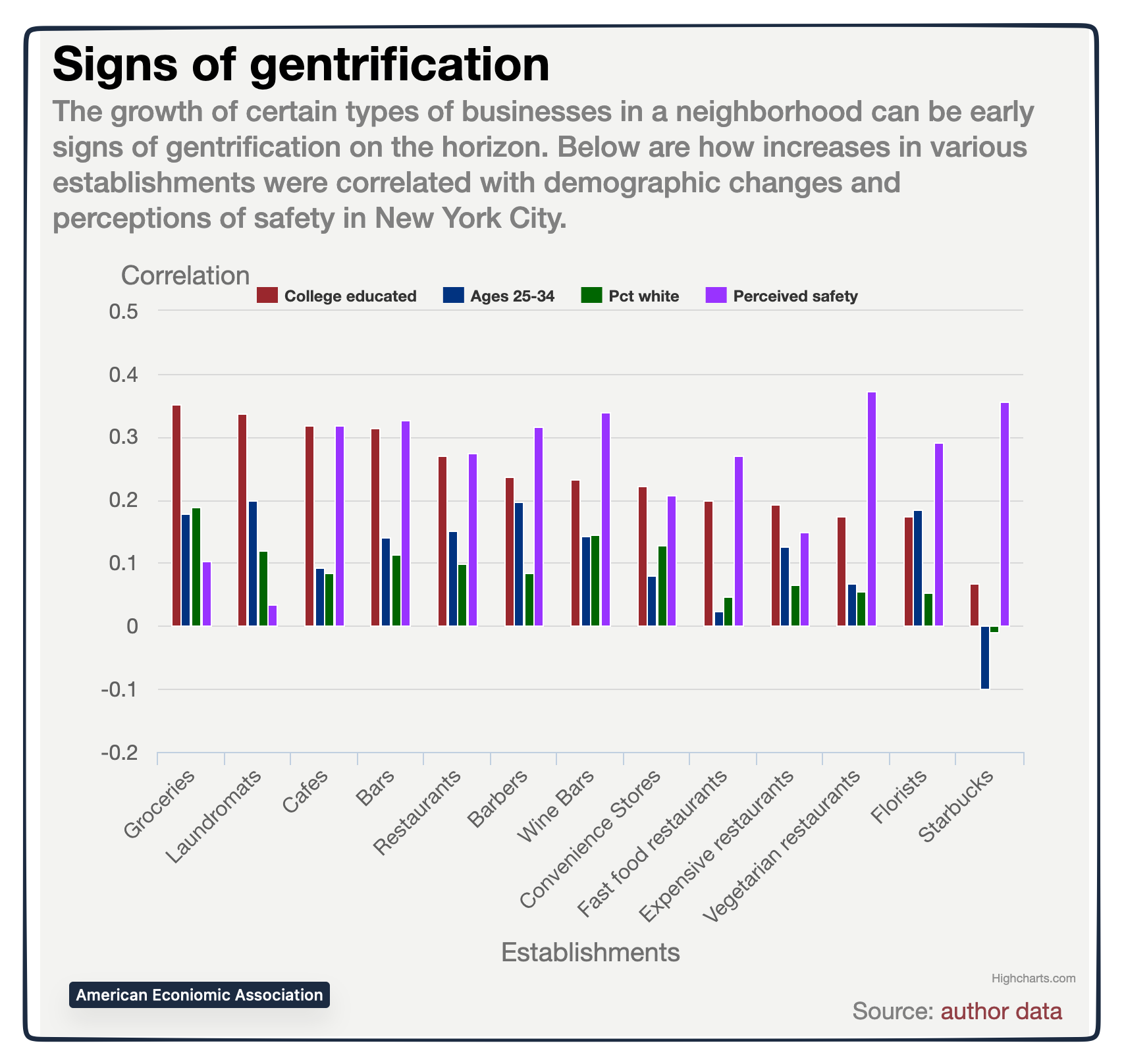
In addition, the Harvard researchers found that a 10-unit increase in Starbucks during this year was associated with a 4.8% change in price. Similarly, looking back, they found that two years after a 10-unit Starbucks increase, housing prices were up by 2.6%.
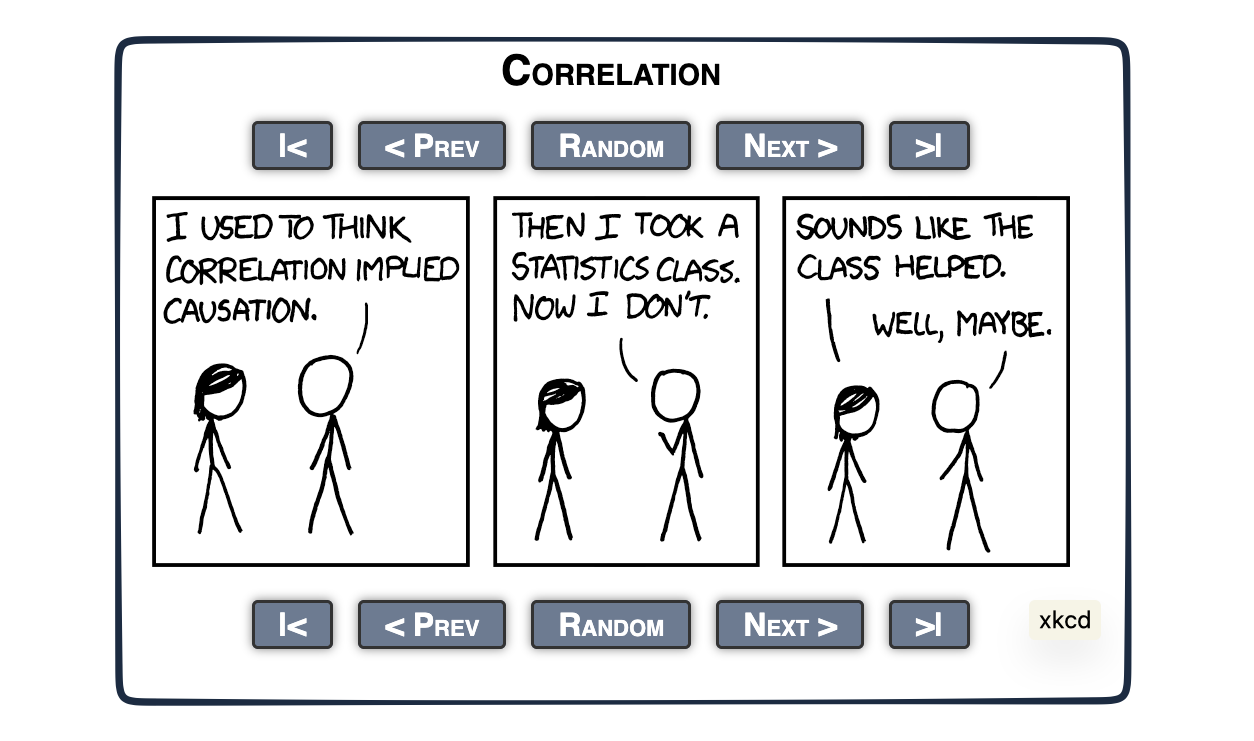
And that returns us to correlation or causation.
Our Bottom Line: Correlation or Causation
In the Ed Glaeser et al. paper, researchers said they did not have the data to determine causation. Their caution reminds us to distinguish between correlation and causation.
And to smile:
My sources and more: Browsing, I returned to a Washington Post article on political campaigns’ food bills. When that took me to today’s focus on Starbucks, we started with his NBER paper and this AEA article on the same paper. But we wound up at this Fast Company graphic and Spurious Correlations.