![econlifelogotrademarkedwebsitelogo[1]](/wp-content/uploads/2024/05/econlifelogotrademarkedwebsitelogo1.png#100878)


How to Gobble 66 Hot Dogs in 10 Minutes
July 6, 2026
The Real Reason for Higher Egg Prices
July 8, 2026
In Stocks for the Long Run, University of Pennsylvania professor emeritus Jeremy Siegel told us that holding stocks for the long run would earn us an average annual return of approximately 6.7%. But first, we need to diversify through low-cost index funds. Then, resisting the temptation to sell during downturns, we should hold those equities for 20 to 30 years. And lastly, we have to reinvest the dividends.
Below, you can see the return when we hold stocks for the long run:
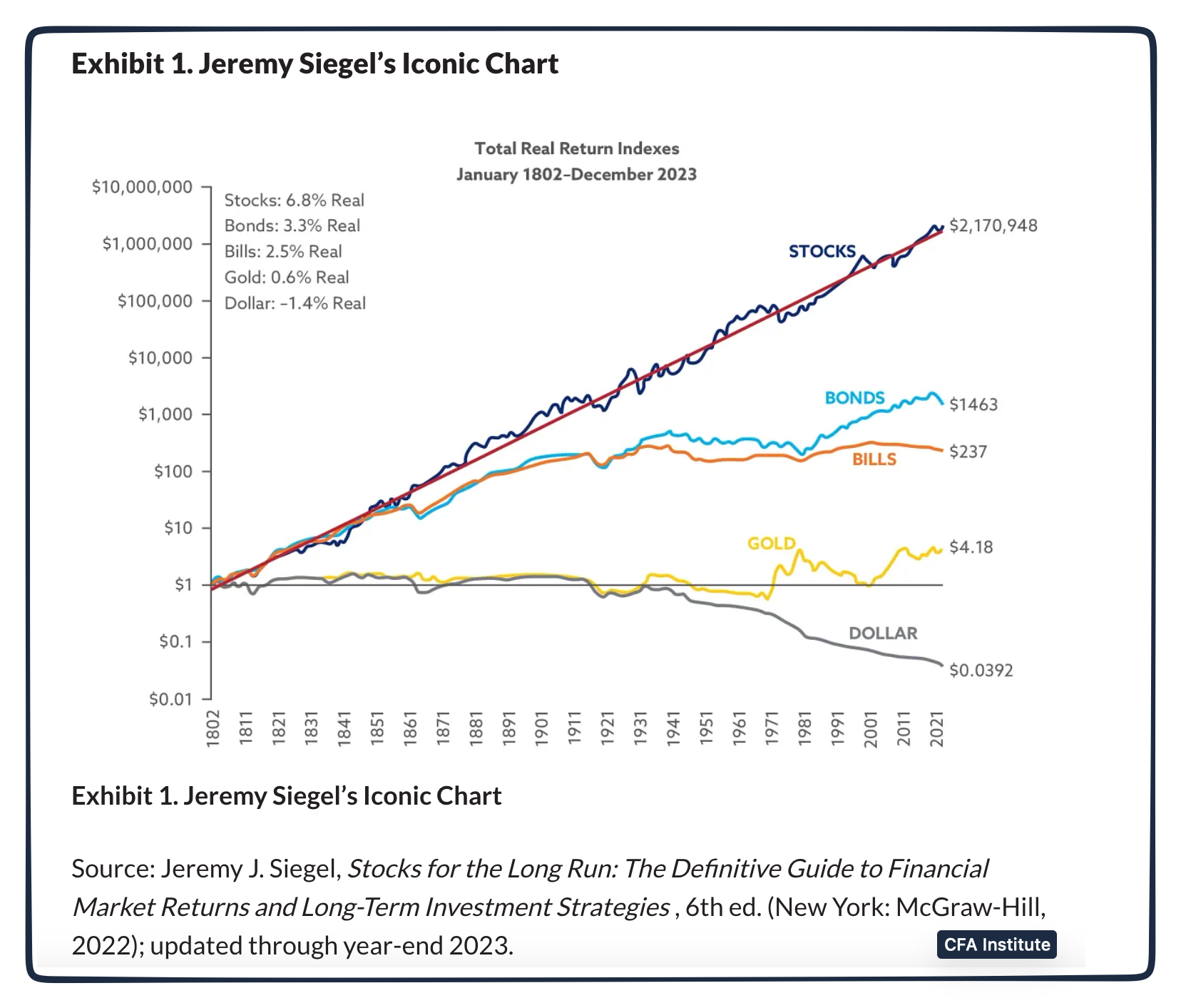
Now though, a new paper tweaks Professor Siegel’s advice.
Stock Market Investing
Focusing on stocks issued by close to 29,000 firms from 1926 to 2025, a new stock market study concluded that wealth creation depends on a small number of investments. According to the data in “One Hundred Years In the U.S. Stock Markets,” just 46 firms produced half of the century’s wealth creation.
When they calculated “buy and hold” outcomes (with reinvested dividends), the annualized return was 10.1%. However, a negative median of -6.87% indicated that slightly less than 50% of the stocks generated a positive return.
Consequently, during the past century, while it was easy to pay attention to winners like Amazon and Alphabet, we should instead have realized that there were many more losers. Or, as stock market history tells us, “… the first 27,999 (96.28% of total) firms generated zero net wealth enhancement, as they collectively matched Treasury bill outcomes. The remaining 1,082 firms (3.72% of total) accounted for all of the $90.96 trillion in net SWC.”
The message? SWC (shareholder wealth creation) can be more complicated than “buy and hold.”
Our Bottom Line: Financial Intermediaries
As financial intermediaries, stock markets connect savers and borrowers. Linking the people with money to those who need it, they help businesses fund research and expansion. They create liquidity for investors who want to trade stocks and bonds. Somewhat similarly, banks are the financial intermediaries that help us pay for a house or a car. And through securities markets, governments can fund a debt. Sort of like a heart keeps nutrient-laden blood flowing around our bodies, stock markets, banks, and others like them pump the money that we need for economic health.
So, when we invest for the long or short run, we too help to pump money around our economy.
My sources and more: Thanks to “Hottest Markets Lead To the Biggest Losses,” for inspiring today’s post and alerting us to the new investing study. From there, it made sense to return to the Jeremy Siegel book and this debate.







1 Comment
Excellent write-up. the information shared here is very valuable. Have a great day and thanks for sharing.