![econlifelogotrademarkedwebsitelogo[1]](/wp-content/uploads/2024/05/econlifelogotrademarkedwebsitelogo1.png#100878)


Our Weekly Economic News Roundup: From Gas Prices to Prediction Markets
March 21, 2026
How Are Emerging Markets Hit By the Iran War?
March 23, 2026
While the NY Post called it “Big Brother Bank,” J.P.MorganChase says the goal is employee well-being.
Through a new monitoring program, the bank is looking at employees’ digital footprint. Then, by collecting data that range from keystrokes to scheduled meetings, they hope to identify underreporting and exhaustion. As a reality check, the initiative is supposed to encourage workload discussions.
It also takes us to working hours.
Working Hours
Lunch
We can start with lunch.
Every single day, the French eat and drink for an average of 2 hours and 13 minutes. In the U.S. mealtimes occupy close to 62 minutes–half of the French average.
Because of the French labor code, workers are prohibited from doing work during lunchtime. Midday, they leave the office to enjoy an hour’s repast (or more) with their work friends.
This data, while eight years old, still reflects relative times spent eating and drinking:
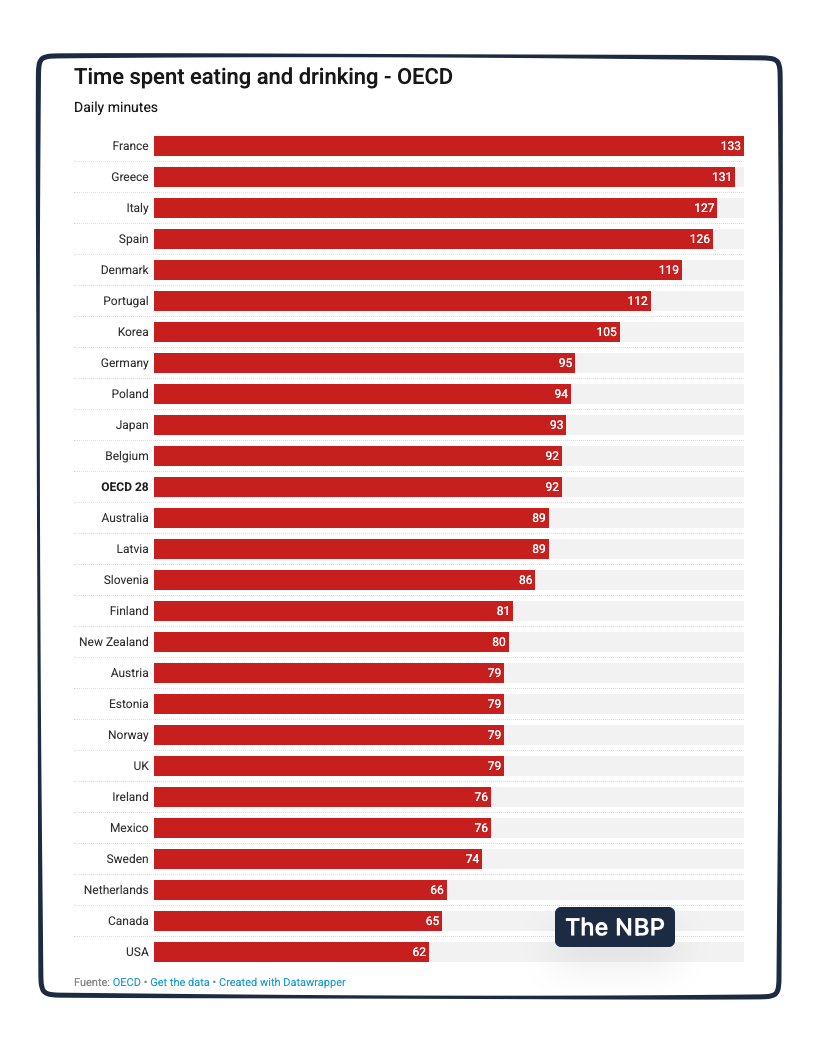
As a norm and a statistic, more time eating and drinking can give us less time to work. But it depends on when and where we look.
Past Working Hours
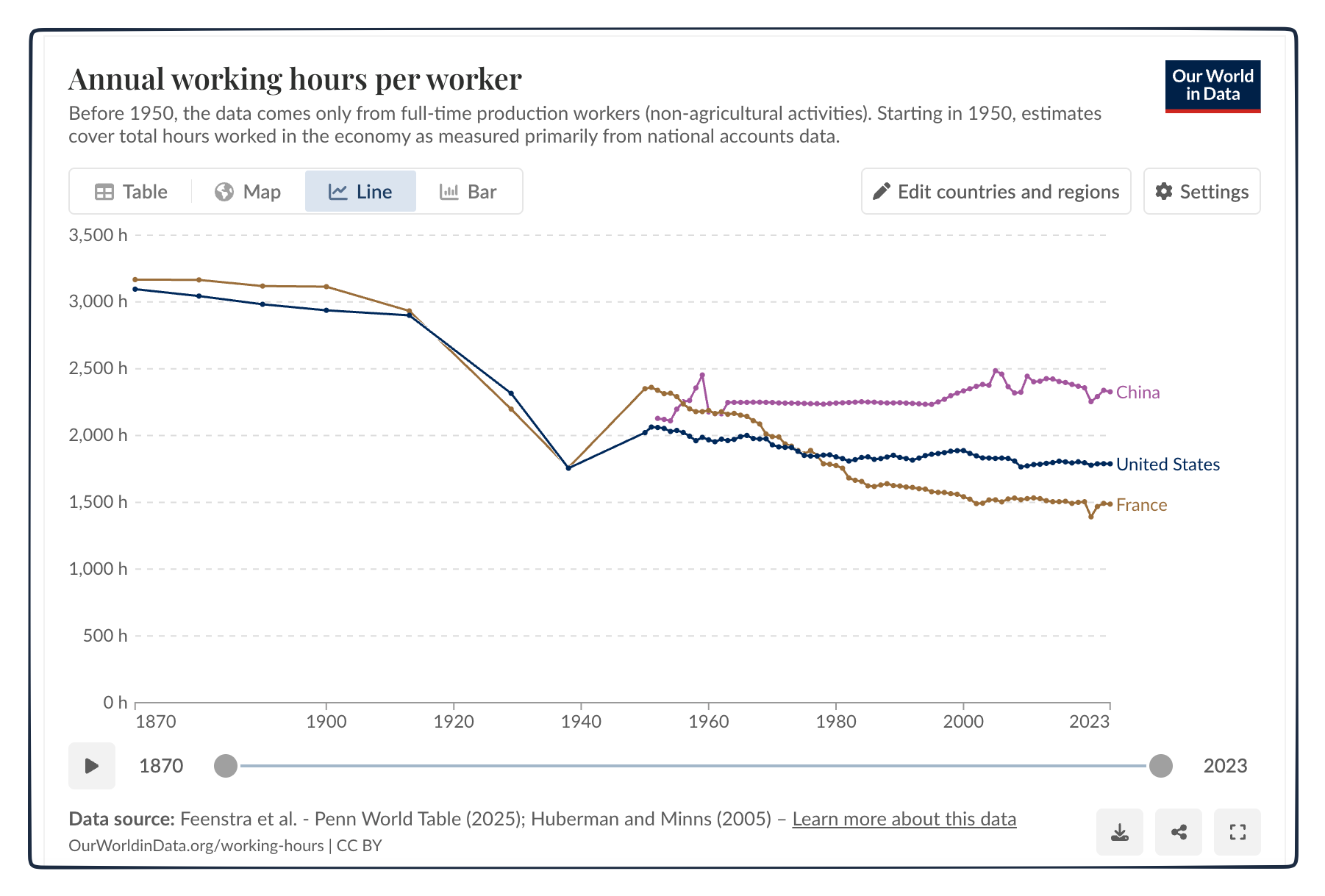
Citing past statistics, Our World in Data notes three periods. The decrease in working hours was slow from 1870 to 1913, picked up steeply between 1913 and 1938 and then, after World War II, the decline diminished:
Currrent Working Hours
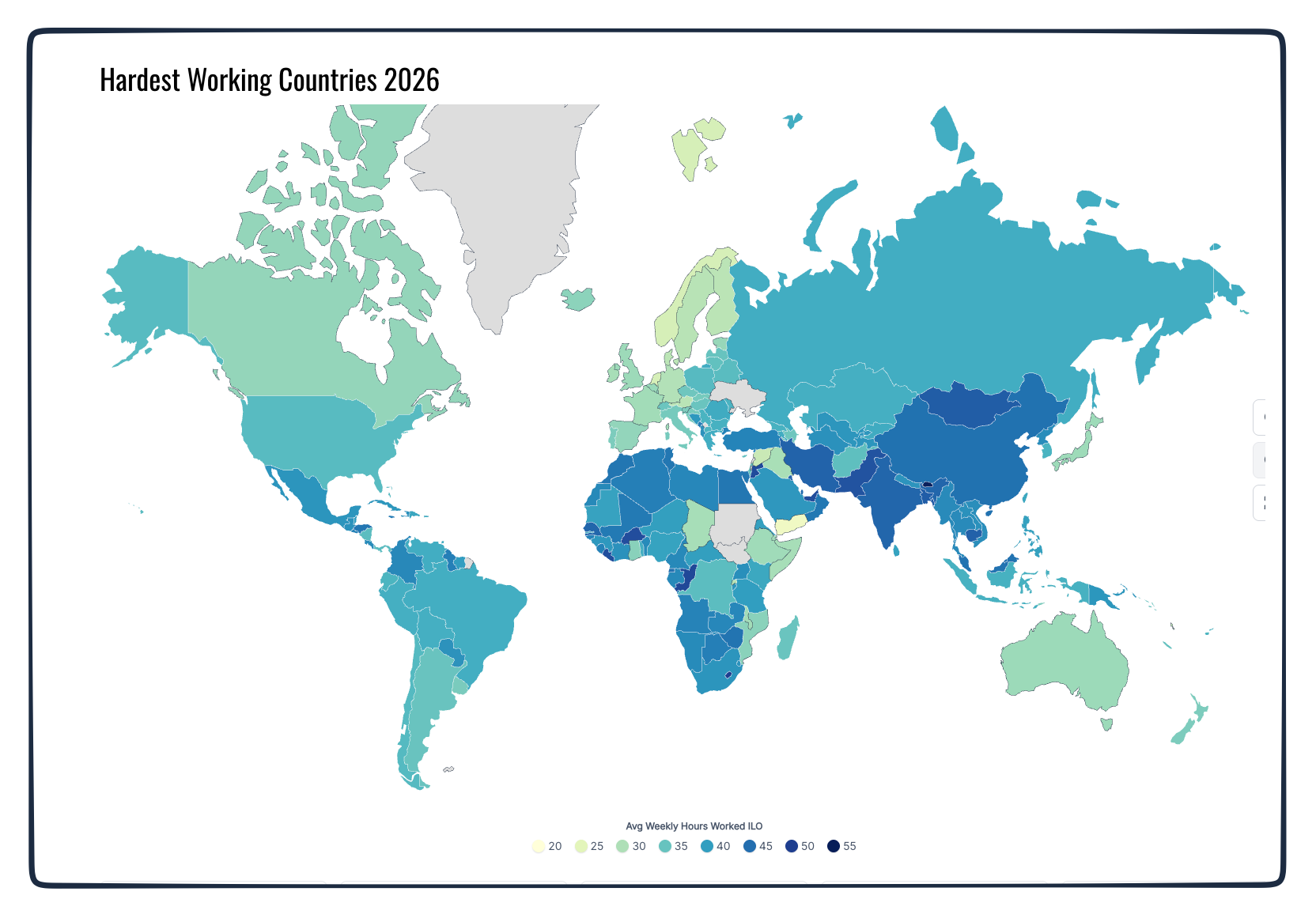
In its 2026 report with the most recent data, the ILO tells us weekly averages that range from Colombia’s 46.2 to the Netherlands’ 30.3. In addition, the United States is at 36.27, France, 30.87, and the ILO average is 38.67 hours a week. But we should note that the OECD has different numbers. Focusing on the “main job,” they have the U.S. at 38.4 weekly working hours and France, 36.2. (Still, France is consistently lower.)
The darker colors reflect more working hours:
Our Bottom Line: Global Working Hours
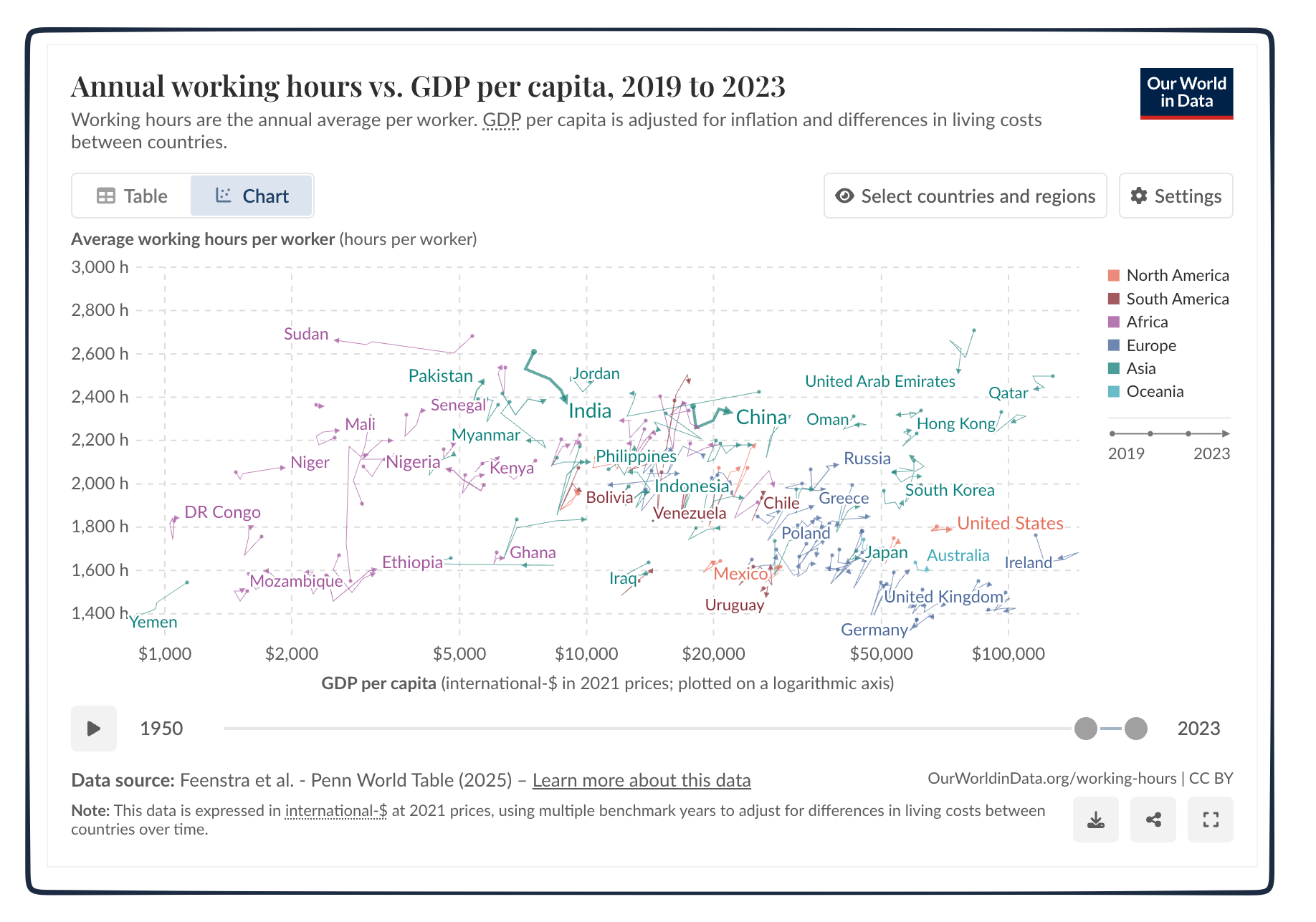
And finally, at the risk of oversimplifying, we can conclude that richer countries work less:
But not JPMorganChase. Their cap for younger bankers is a whopping 80-hour week.
My sources and more: Thanks to the World Business Report for alerting me to the JPMorganChase well-being initiative. From there, the NY Post and the Financial Times had more detail as did Our Life in Rural France. As always, though, Our World In Data, here and here, was the most valuable source for its analysis and data. As for the stats, we should add the ILO (from the World Population Review) and the OECD.