![econlifelogotrademarkedwebsitelogo[1]](/wp-content/uploads/2024/05/econlifelogotrademarkedwebsitelogo1.png#100878)


What We Eat During the Taco Bell Ultramarathon
December 2, 2025
Just Ask Jenna Looks At Bulk Buying
December 4, 2025
In a Pew Research survey, there was a vast chasm between European opinions of the Greek work ethic and how they perceived themselves. Whereas seven European nations thought the Germans were the most hardworking and trustworthy, only the Greek survey participants named themselves. Correspondingly, Greece was frequently named as least hardworking and least trustworthy by others, but not themselves:
 Curious about how many hours we really work, two researchers took a look at 160 countries. They shared their results in a new NBER paper.
The Length of the Workweek
Quantifying the workweek first takes us to which work we count. The authors of the paper specify that they’ve targeted labor aged 15 and older that contributes to the GDP. Consequently, they eliminate household services like childcare and cooking but include unpaid agricultural work.
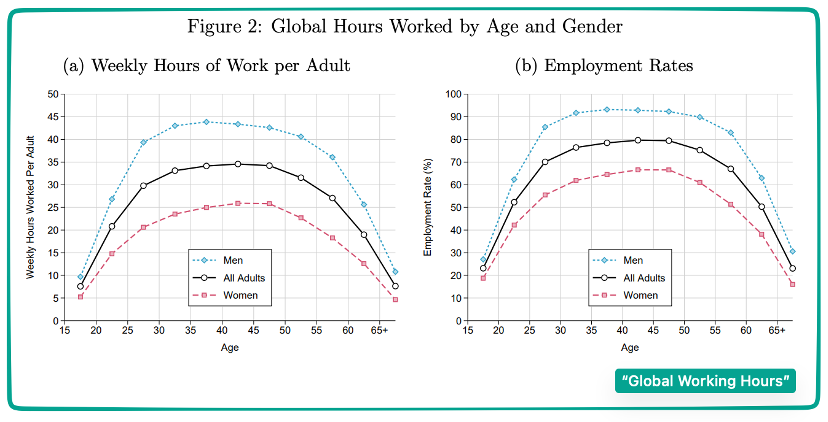
Age and Gender
With 42 hours the overall average, we have an unequal gender split. Women are responsible for 35% of all GDP producing hours while men, 65%. At the same time, seeing that work hours are less for the young and the old, we can hypothesize that youth are in school. As for the aged, the authors suggest that pension support determines when people diminish their employment:
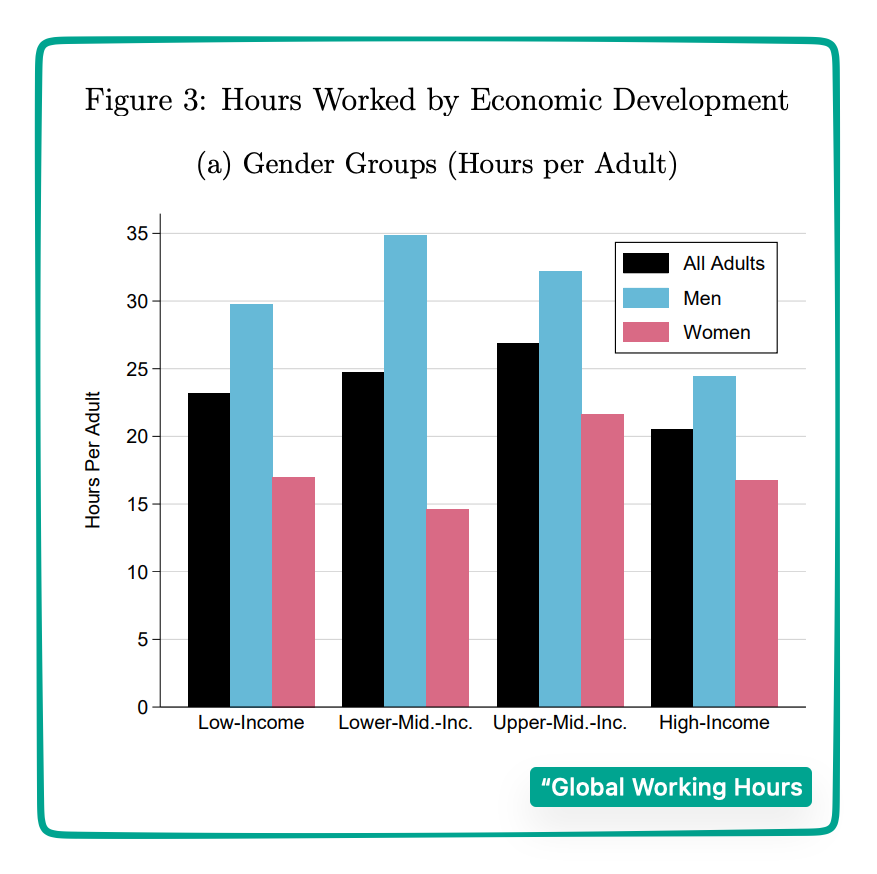
Economic Development
I especially noticed the pink line. Women contribute the most to the GDP in upper middle Income nations and the least in lower middle income countries:
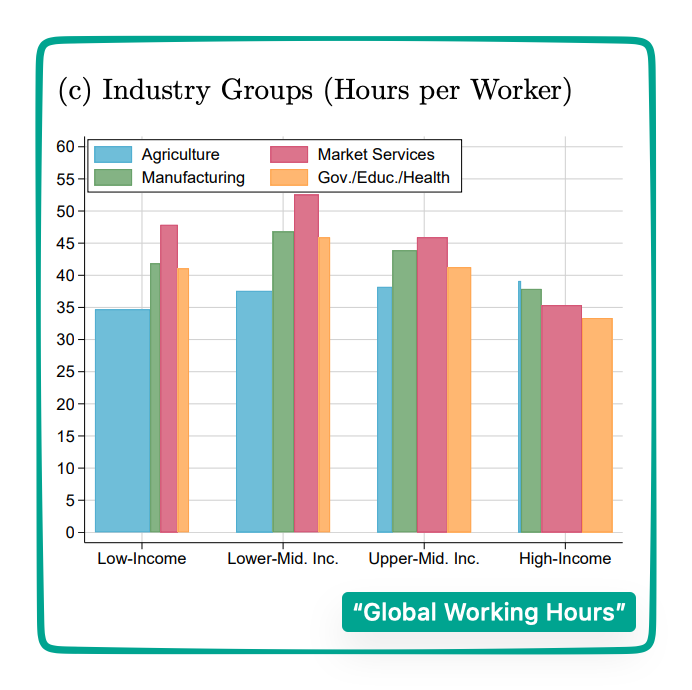
Industry
Looking at height and width, we see working hours shrink everywhere except agriculture as income ascends:
Our Bottom Line: Extra Work Hours
We can start with predictable data that indicate the hours we work correlate to GDP. In addition, the young and the old work less in higher income countries but women work longer hours at GDP related tasks.
However, we can dig more deeply because there always is more to the data story. For example, a recent article from Axios implies a correlation between more men doing home caregiving (children and the elderly) as women’s workforce numbers shrink. They emphasize though that traditional roles are not shifting. Instead, a decrease in household savings puts pressure on many of us to add unpaid caregiving to our work hours. As a result, Guardian tells us that 43% of the workforce does caregiving that, for 51%, totals 10 to 29 hours a week.
Thanks to my NBER Digest email for alerting me to the new workweek paper. Then, my concluding Axios article was here. which took me to other details here and here.
Please note that several of today’s sentences were in a past econlife post.