![econlifelogotrademarkedwebsitelogo[1]](/wp-content/uploads/2024/05/econlifelogotrademarkedwebsitelogo1.png#100878)


How Harry Styles Hikes Inflation
July 12, 2026
Why Driscoll’s Can Charge More For Its Strawberries
July 14, 2026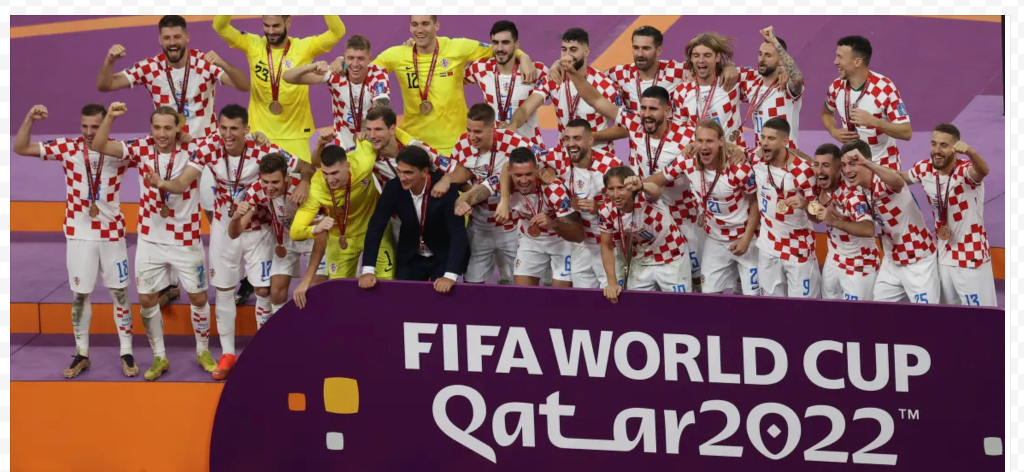
Now, with the World Cup semi-final games scheduled for tomorrow (France/Spain) and Wednesday (Argentina/England), we will soon know the top three teams. Also, we can predict why one of them will be the saddest…like Abel Kiviat.
Sad Second Place Winners
Looking back at the 1912 Olympics, Abel Kiviat (June 23, 1892 – August 24, 1991) said, “I wake up sometimes and say, ‘What the heck happened to me?’ It’s like a nightmare.”
He lost the 1,500 meter race by one-tenth of a second:

Abel Kiviat responded like many second placers.
Second Place Winners
Silver medal winners tend to be less happy than the athletes who won bronze.
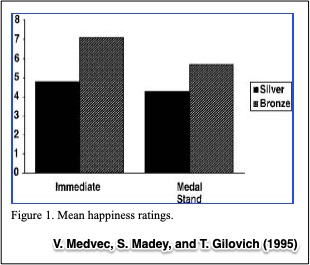
In one paper, psychologists used shots of 20 silver and 15 bronze 1992 medal winners. Study participants then rated the expressions on a 1 to 10, agony to ecstasy scale in which 1 is agony and 10 is ecstasy. The mean for the silver medalists was 4.8 whereas bronze was 7.1. Measured another time, the silver average was 4.3 and bronze, 5.7.
You can see that bronze winners, in the bars on the right, have higher happy scores:
But more than a graph, this silver medal winning hockey team says it all.
At Sochi, 2014, the Canadians got the gold and the Swiss, the bronze. The Canadians were ecstatic but not the second place US team:

Or gymnast McKayla Maroney had the classic silver medal face in 2012:

By contrast, in our featured image (from Al Jazeera], Croatia is exceedingly happy to have won the bronze.
Our Bottom Line: Reference Points
As a behavioral economist, we could say that silver and bronze medalists feel differently because of their reference points. Reference points come in handy as a tool for assessing an accomplishment. At work we will be unhappy with a 5% raise when an associate gets 7%. If our stock portfolio plunges, we don’t feel so bad if the S&P declined even more.
Similarly, second place winners focus on the counterfactual that could have been. They think, “if only…” and “why didn’t I just…” By contrast, bronze winners tend to take pride in having won a medal and topping so many other competitors. The silver medalist focuses “upward” on the gold winner as his or her reference point. Meanwhile the bronzers think “downward” about the fourth place (and lower) they thankfully avoided.
As economist John List explained, we can do “gain framing” or “loss framing.” For humans, the pain of loss is more intense than the joy of gain. The silver medalists are in the loss group while bronze feels the gain.
Returning to the 2026 World Cup, we can wonder today if Argentina, England, France, or Spain will have the second place blues.
My sources and more: Like me, you might need to start with this description of how 1st, 2nd, and 3rd place World Cup teams are selected. Then, I suggest this Hidden Brain podcast and an article from economist John list. Please also note that some of today’s sentences were in a past econlife post and the McKayla Maroney photo is from the AP/Julie Jacobson.