![econlifelogotrademarkedwebsitelogo[1]](/wp-content/uploads/2024/05/econlifelogotrademarkedwebsitelogo1.png#100878)


Our Weekly Economic News Roundup: From Tariffs to Popcorn
February 21, 2026
Why It’s Tough To Tame Beef-Flation
February 23, 2026
Because of a sleep dispute, an elite New York financial firm agreed to a pre-trial settlement with a former associate.
Sleep??
Let’s take a look.
Sleep Time
The M&A (Mergers and Acquisitions) firm, Centerview Partners, changed its mind about how much a new employee could sleep. Told that her medical condition required nine hours of snooze time, the firm initially said she did not have to work from midnight to 9 am. In exchange, she said she would be available at all other times. Soon after, though, they fired her. Responding, she took them to court for “disability discrimination.”
Notorious for the long hours they demand from employees, Wall Street firms expect all nighters. Consequently, this Centerview junior analyst was told that she should never have sought an investment banking position if she needed 8 to 9 hours of sleep.
Had the case gone to trial, FT said a “central issue” would have been, “whether it is actually essential that someone be available at three in the morning.” They also would have considered whether Centerview had engaged in an “interactive process” through whch they discussed her needs with her.
The woman had been terminated while working on a presentation for Duke Energy after senior bankers expected late night work from her. Instead, at midnight, she logged off. The firm said her position limited her own personal development and the project’s cohesion.
We can ask though, how sleep affects the firm’s productivity.
Our Bottom Line: Productivity
Focusing on productivity, a Rand study that covered more than 62,000 UK workers said the U.S. GDP was 2.28% lower because we don’t sleep enough. Translated into workdays, the total is 1.23 million that we miss.
Less sleep in developed nations has been blamed for lower productivity. Below, Rand estimated how many billions of dollars countries sacrifice from insufficient sleep:
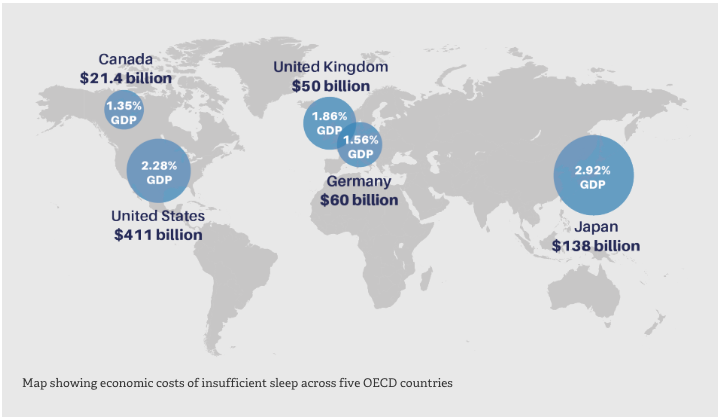
From: RAND Europe Analysis (2016)
We also can cite a university study that demonstrates how more sleep boosts grades. Researchers established incentives that ensured participants had 7 hours of sleep by 9 am on weeknights. The incentives included bedtime reminders and a financial reward of $4.75 each time they met the goal. Then, winding up with usable data from 1123 students, scholars concluded in an NBER paper, that, especially in STEM courses and classes that met midday, sleep boosted grades.
Finally, told by a Science article that Americans get an average of 6.1 hours of sleep although 7 to 9 hours would be optimal, we can ask where:
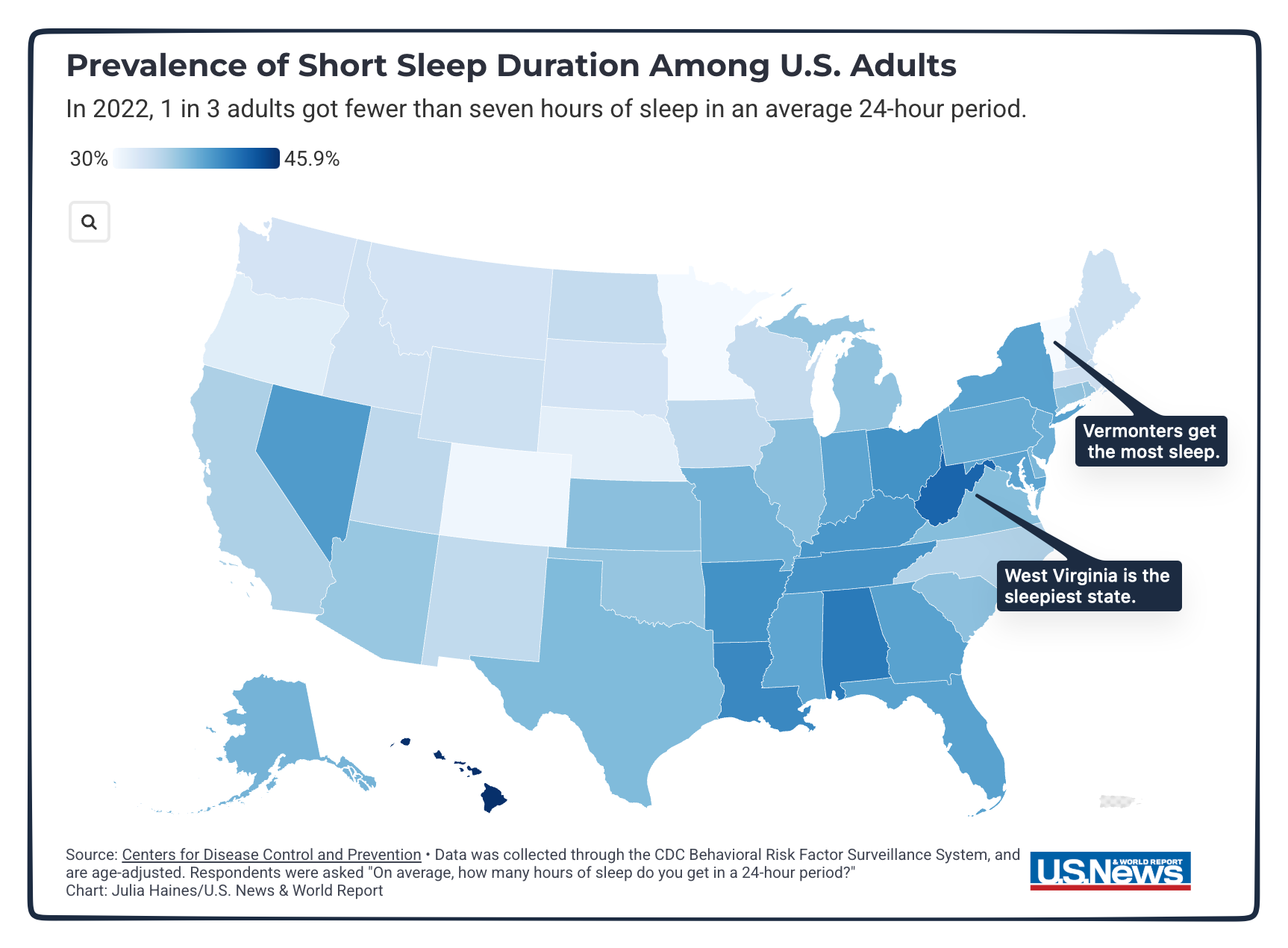
Returning to where we began, we can ask if more sleep could make Centerview employees more productive. Centerview would probably say, “No.”
My sources and more: Thanks to FT for inspiring today’s post. However, if you want to read more about the case, this lengthy FT article was perfect for understanding the issues. Then, taking the leap to sleep and productivity, several studies, here and here, were helpful. And, in the past, here and here, econlife shared the different sides of sleep.







1 Comment
I really like reading through a post that can make men and women think. Also, thank you for allowing me to comment!