![econlifelogotrademarkedwebsitelogo[1]](/wp-content/uploads/2024/05/econlifelogotrademarkedwebsitelogo1.png#100878)


The Impact of a Credit Card Interest Rate Cap
January 13, 2026
Just Ask Jenna Looks At Our Herd Mentality
January 15, 2026
You, (like I) might be wondering why the highest tariffs in our memories (and long before that) appear to have minimally upset our economy. Although some tariffs have ascended from as little as 1% to more than 100%, prices have not soared, and Wall Street is happy.
There is a reason. But it might not last.
The Tariff Impact
To start, the announced tariff usually is not the real one. At the beginning of this year, at 14.1%, the rate was close to half the publicized amount. The list of reasons ranges from country and industry exemptions to individuals sidestepping the rules.
In addition, it depends on whether the item was already on the boat when the tariff was announced. Goods in transit could have been excluded from the new tariffs. As a result, non-tariffed, they entered the flow of imports.
To all of this, we had a slew of specific exemptions. On chips the actual rate was closer to 9% rather than the 28% official rate, and for Taiwan’s chips exporters, 8%.
Further adding to the randomness, during the past several weeks furniture, vanities, kitchen cabinets got a year’s respite. Also, Italian pasta makers had their hike temporarily reduced.
At this point, we could add many more examples but instead should end with the trade deal that was here in the beginning. Referring to USMCA, exporters from our neighbors declared that 90% of their goods were compliant with low or non-tax USMCA rules.
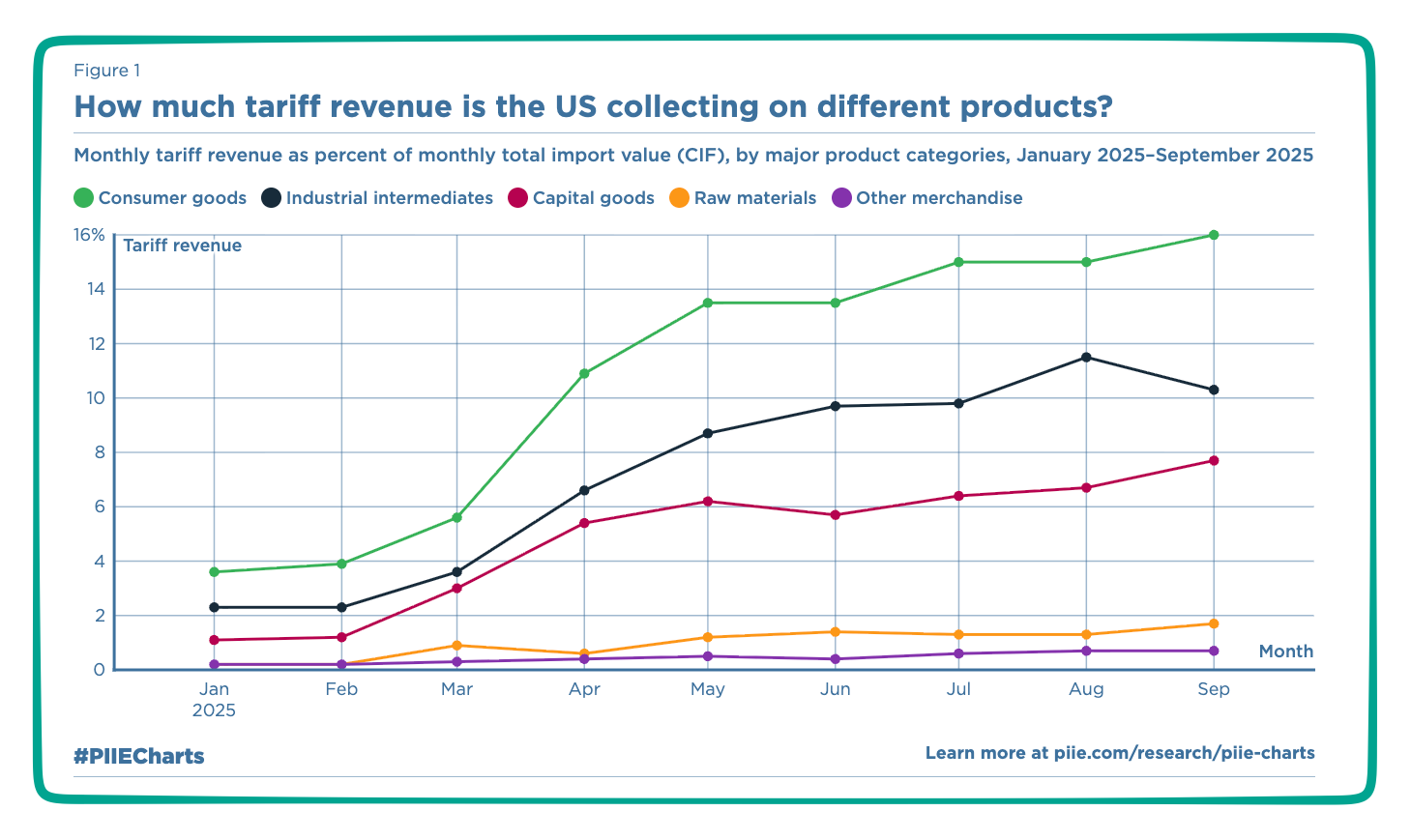
So, with researchers calculating that U.S. firms pay 94% of tariffs’ costs, we can see why we don’t feel the impact…YET.
We can predict though that consumers will be hit the hardest:
Our Bottom Line: British Coastline
It all returns us to the length of the British coastline. Viewed from afar, the coastline appears to be a smooth line. However, looking more closely, we see its length is far longer because of countless curves and indents:

Similarly, President Trump could decare a tariff of 28%. But really there is much more.
My sources and more: Always a handy source, NY Times journalist Ana Swanson provided the factual foundation for today’s post as did this NBER paper. Then, ideal for trade facts and analysis, PIIE has a tariff tracker. And for more, do take a look at what econlife said about wine tariffs.