![econlifelogotrademarkedwebsitelogo[1]](/wp-content/uploads/2024/05/econlifelogotrademarkedwebsitelogo1.png#100878)


The Economic Side of a Cat Parent
January 21, 2026
Just Ask Jenna Looks At Judging Yourself
January 22, 2026
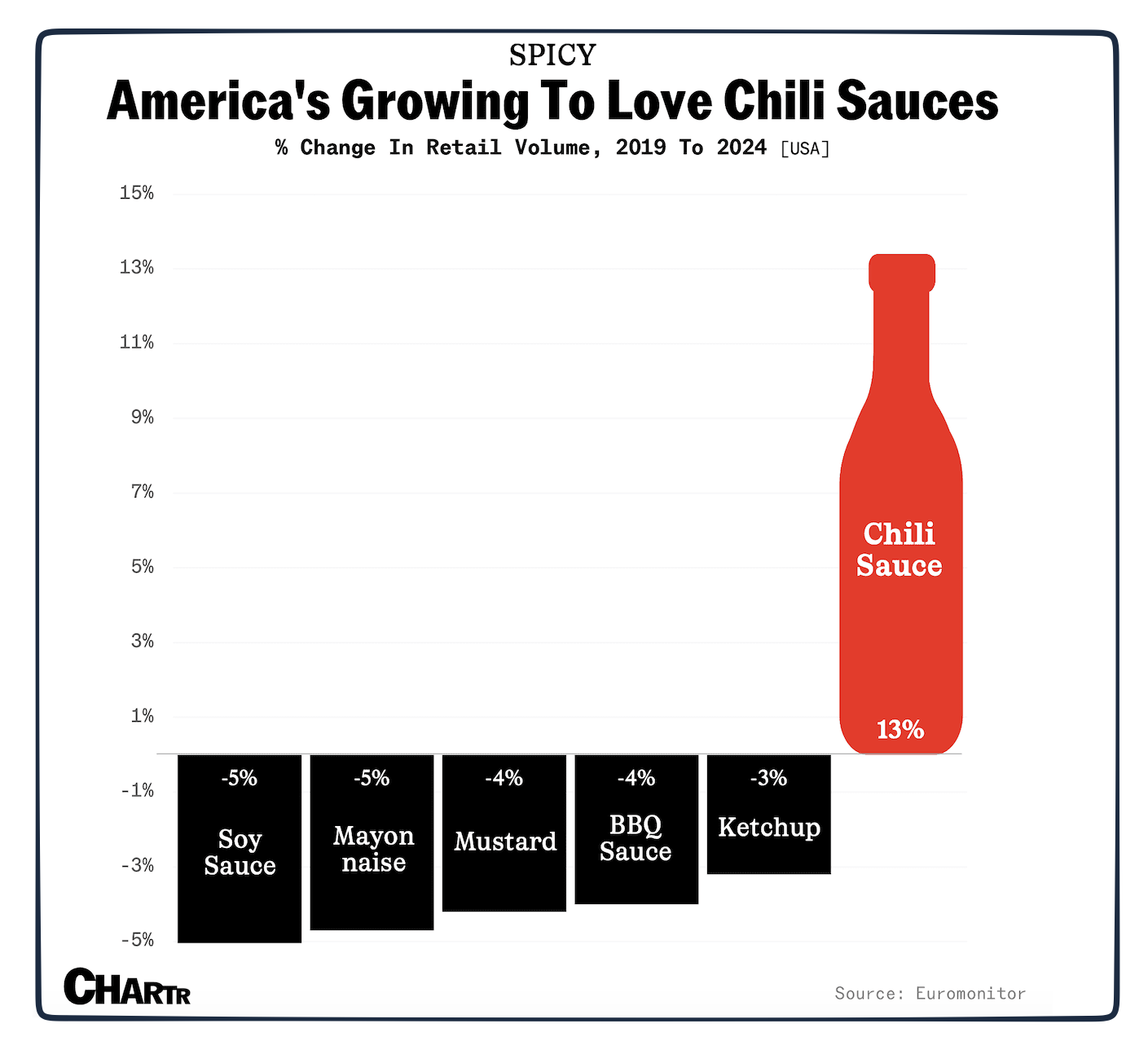
We have an increasing preference for heat.
Among the sauces that Euromonitor tracks, chili sauce is the one group that grew:
Hot Sauce Trends
As we’ve upped our consumption of Asian, Latin, and African cuisine, so too has our tolerance for spice. Correspondingly, Frito Lay’s Flamin Hot flavoring ranks #1 in spicy salty snacks.
It’s Gen Z though that is fueling the trend.
Asked about their hot sauce habits, more than 1000 participants in a Circana study described their commitment. Meanwhile more than half of the Gen Z participants said they were hot sauce connoisseurs:
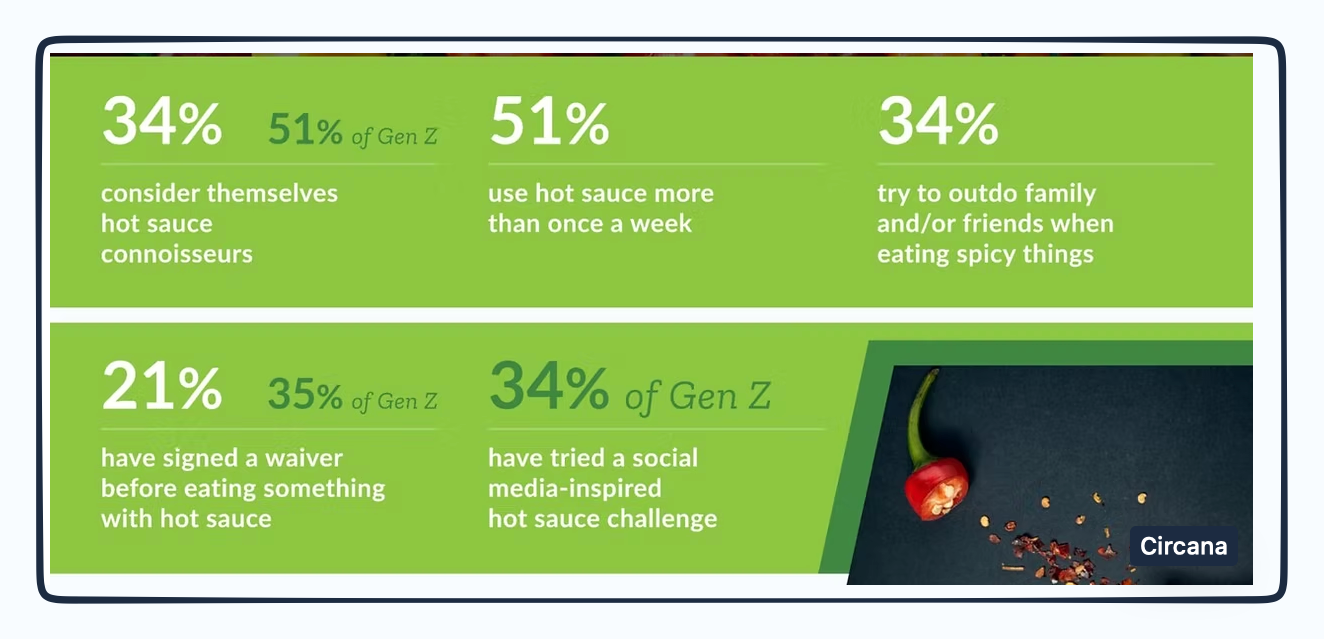
Asked why we consume hot sauces, the top answer was enjoying the taste. #2 was adding depth to the dish while the third reason was enjoying the heat sensation.
Hot Sauce History
The year was 1912 and the firm was Parke-Davis. As one of their pharmacists, Wilbur Scoville was asked to determine the pungency levels of ingredients used for medical ointments. Shown below, he developed the Scoville Heat Unit (SHU):
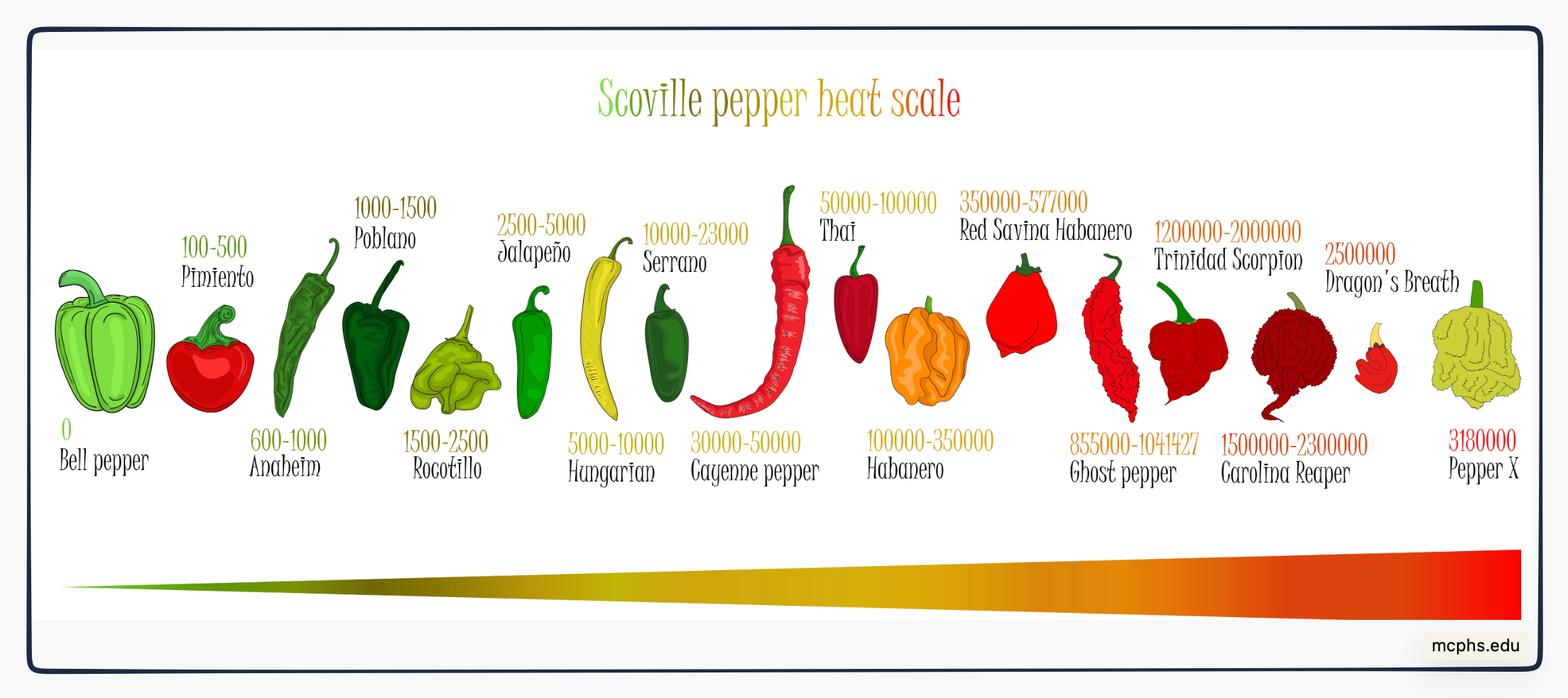
The Red Hot Chili Pepper Scale
Scoville used five tasters and watered down capsaicinoids (the source of pungency in chili peppers) to develop his heat scale. By increasingly diluting the capsaicinoids until three of the tasters no longer detected any heat, he could create a water-capsaicin SHU (Scoville Heat Unit) ratio. The higher the SHU, the hotter the pepper.
The human mouth though is problematic because our capsaicin response varies. Yes, we all have pain receptors that trick our brain into thinking our mouth is heating up when it contacts capsaicin. However those of us with more sensors have a much hotter sensation (my response is so hot that I cannot eat even one pepper). As a result, the process has been mechanized with high-performance liquid chromatography that provides a precise measurement of capsaicinoid levels.
Below you can see that a bell pepper is rather tame while chilis as potent as the Carolina Reaper require an ambulance.
India’s Naga King Chili-Eating Competition
Unlike Nathan’s hot dog contests, the Naga King requires chewing and gives participants only 20 seconds to down as many chilis as possible. One competitor who ate five Bhut Jolokias (please see above scale) was rushed to the hospital while the winner was “crouched on the floor, glassy eyed” after consuming 14 within the 20 second limit.
So yes, we need to know about chili pepper heat for making our ointments, sauces, spices, industrial solvents…and for extreme chili pepper eating competitions.
Our Bottom Line: Standardized Weights and Measures
The tale of the Scoville Scale is really about the basics of commerce. To trade beyond your home town, you need a shared standard for your weights and measures. When you say something weighs a kilogram, or is as long as a yard, or as hot as 500,000 Scoville Heat Units, everyone knows precisely what you mean.
Today in the U.S. the National Institute of Standards and Technology (NIST) is the place to go for an inch or a second or any definitive standard for measurement that is used in commerce and research.
Preserved in a vault, this is the standard kilogram:

From: National Institute of Standards and Technology
Our Bottom Line: Demand
My sources and more: Thanks to my Sherwood News email for inspiring today’s post. From there, we checked a Circana hot stuff study and found the history of Wilbur Scoville.