![econlifelogotrademarkedwebsitelogo[1]](/wp-content/uploads/2024/05/econlifelogotrademarkedwebsitelogo1.png#100878)


Just Ask Jenna Looks At Allocating Your Time
January 29, 2026
January 2026 Friday’s e-links: The Mayor’s New Jackets
January 30, 2026
During 2020 because of coronavirus pandemic lockdowns, many of us stopped eating McDonald’s fries. As a result, McDonald’s, Burger King, and others like them no longer needed their potatoes. Following the supply chain backwards, we could wind up at Cranney Farms in Idaho where many of the billion or so potatoes that Cranney harvests each year were not delivered.
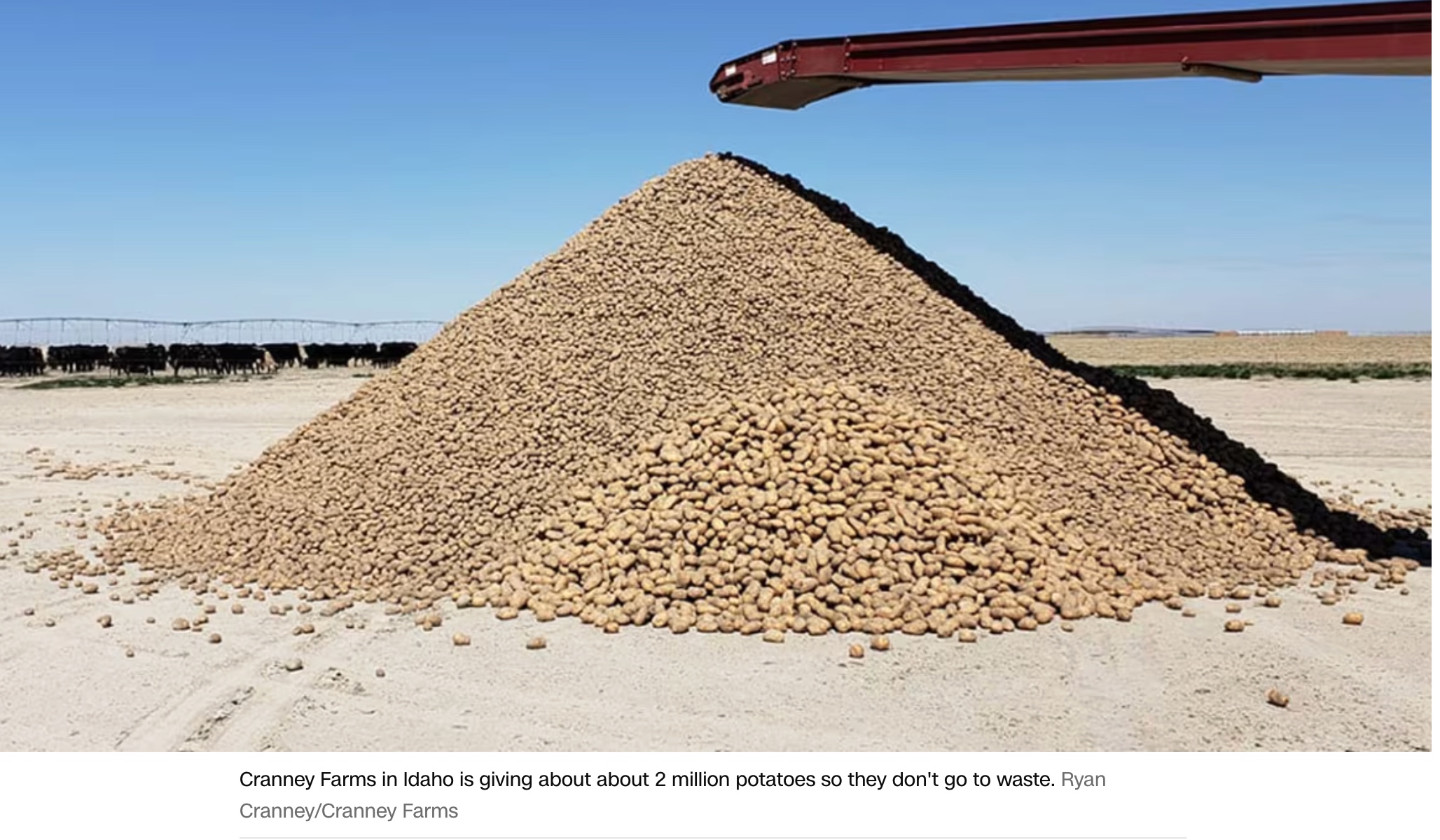
Solving the problem of so many unsold potatoes, Cranney created a two-story high mound that anyone could access. Individuals whose families needed potatoes, representatives from food banks, shelters, elderly homes, anyone who could use some extra bags arrived. Cars, from as far away as Kansas, lined up.
This was the Cranney potato pile:
Now, Berlin also has piles of potatoes.
Potato Glut
During one morning this week, 5,000 potatoes arrived at a former airfield in Berlin. The giveaway plan developed when the editor-in-chief of a local newspaper heard about a farm with a 4,000 ton glut of unsold potatoes. Enough for every one of Berlin’s 3.8 million residents to take home a bagful, potato sharing was an idea waiting to happen. When tech firm, Ecosia, said they would pay for transport, the deal was done.
A potato glut was the reason for the giveaway. Having enjoyed optimal weather, European farmers harvested a bumper crop. The most bountiful in 25 years, the crop was more than 2 million tons above the average. Then, making it even worse, Chinese, Indian, and Canadian farmers also upped their acreage. At this point, it would have helped if consumers continued guzzling deep-fried crisps and chips, but instead their demand plateaued.
On the delivery day, word had spread so quickly that all 5,000 potatoes had a new home by noon. One Berliner said she planned to use her potato stash for “potato dumplings, soup, salad; stuffed potato croquettes; boiled potatoes with Quark (a German cream cheese), potatoes hashed and fried.”
Our Bottom Line: Supply and Demand
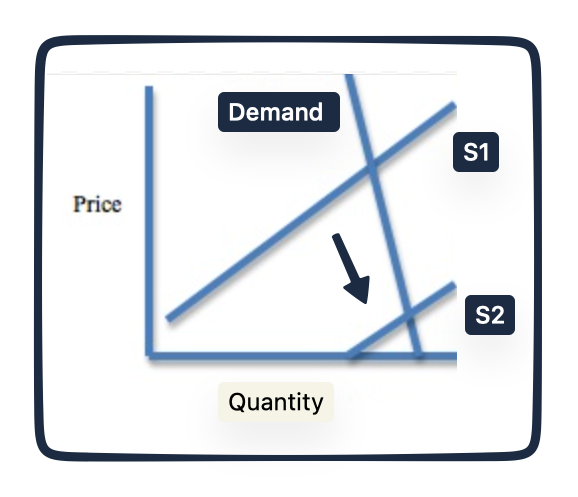
Hearing that potato prices are down, we can see why. It’s all about the supply curve shifting to the right:
My sources and more: Thank to my BBC World Business Report podcast for alerting me to Germany’s potato glut. From there, I discovered the details at FT, and then Potato News Today and DW and Trading Economics detailed the potato price plunge.