
What We Can Learn From Starbucks
November 18, 2026
Seemingly as simple as what we keep in a wallet, money is much more complicated.
Six Facts: Currency History
1. Definitions
When we refer to money, we might be really talking about currency. According to a new paper from the BIS (Bank for International Settlements), money is what we use to “extinguish” a financial obligation. By contrast, currency is “a unique monetary unit that is generally accepted for measuring economic value within a specific political jurisdiction.” Most recently, governments authorize currencies. However, during the 19th century, before the spread of central banks, currencies came from governments and individual banks.
2. The Numbers
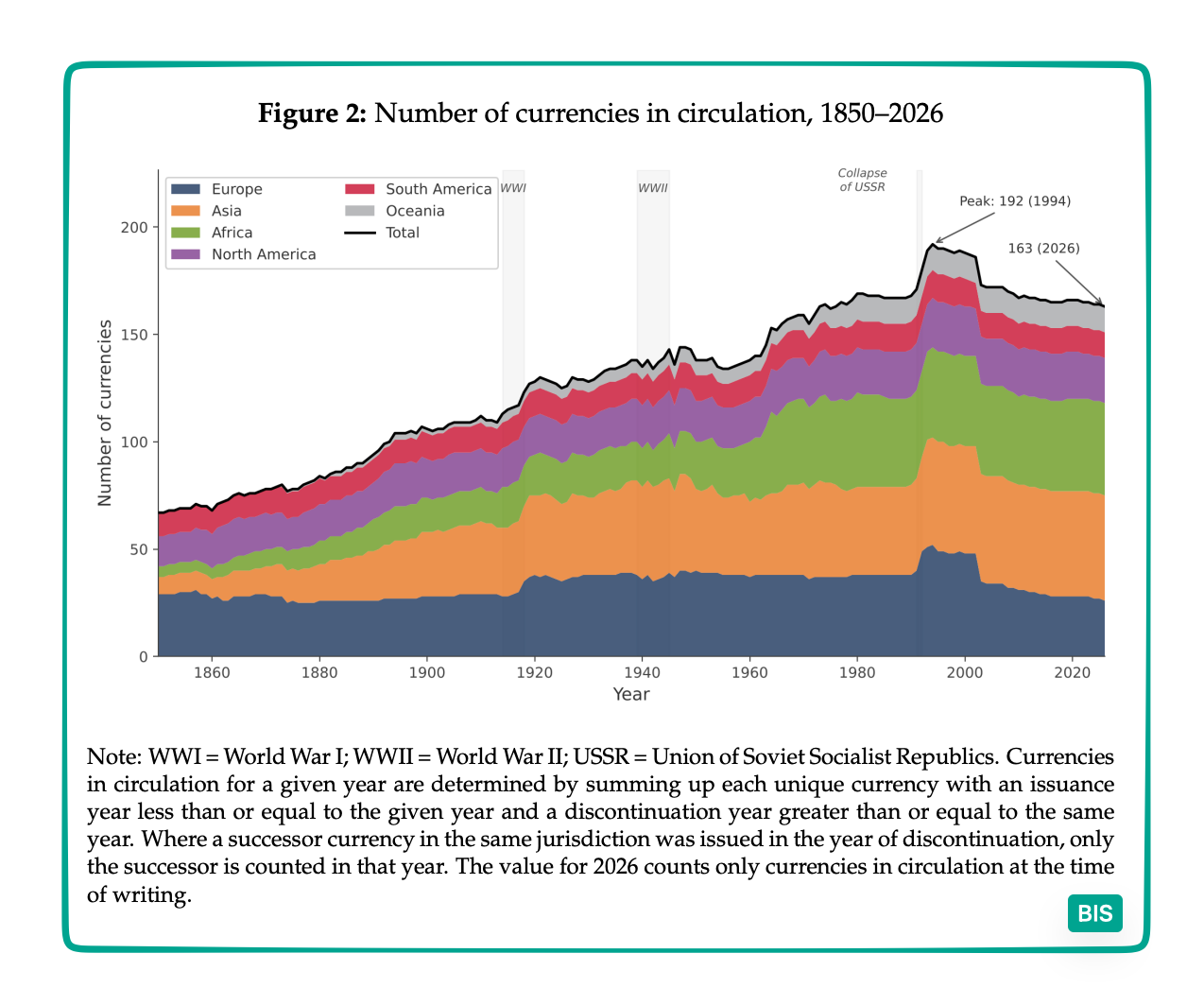
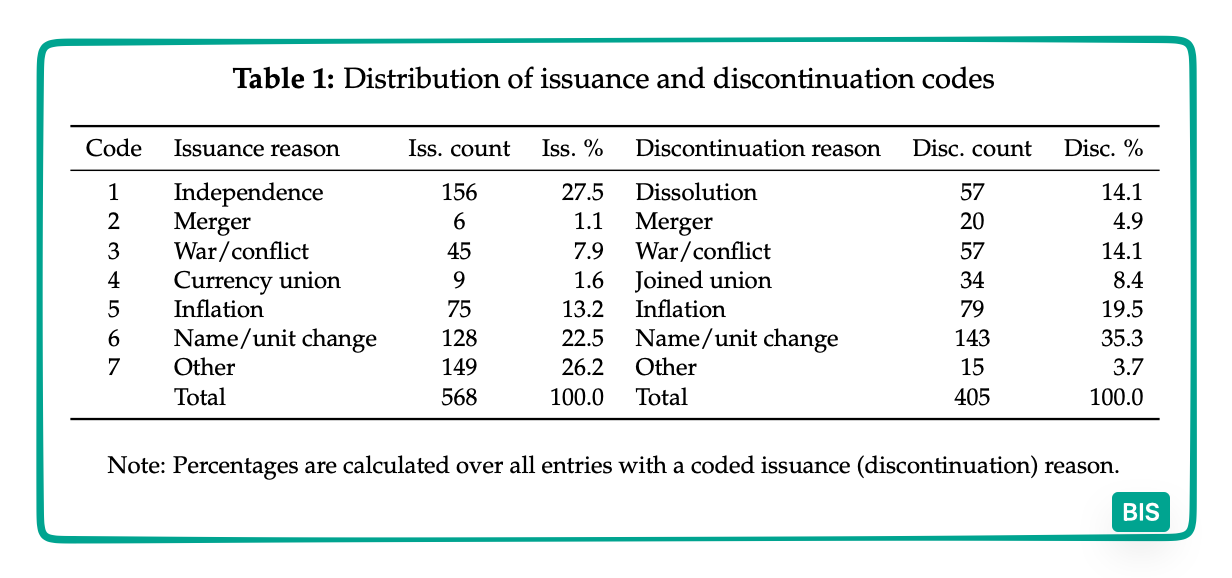
From 1850 to October 2026, there have been 568 circulating currencies and 405 that were discontinued. While there were approximately 67 currencies in 1850, from there, after a peak of 192 in 1994, the total slid to 163 in 2026.
3. The Reasons
Politics has been the main reason for new currencies, while economics has fueled their disappearance.
Among the 568 currencies that were issued, the dominant reason was independence. As for dissolution, it was a name or unit change:
4. Lifespans
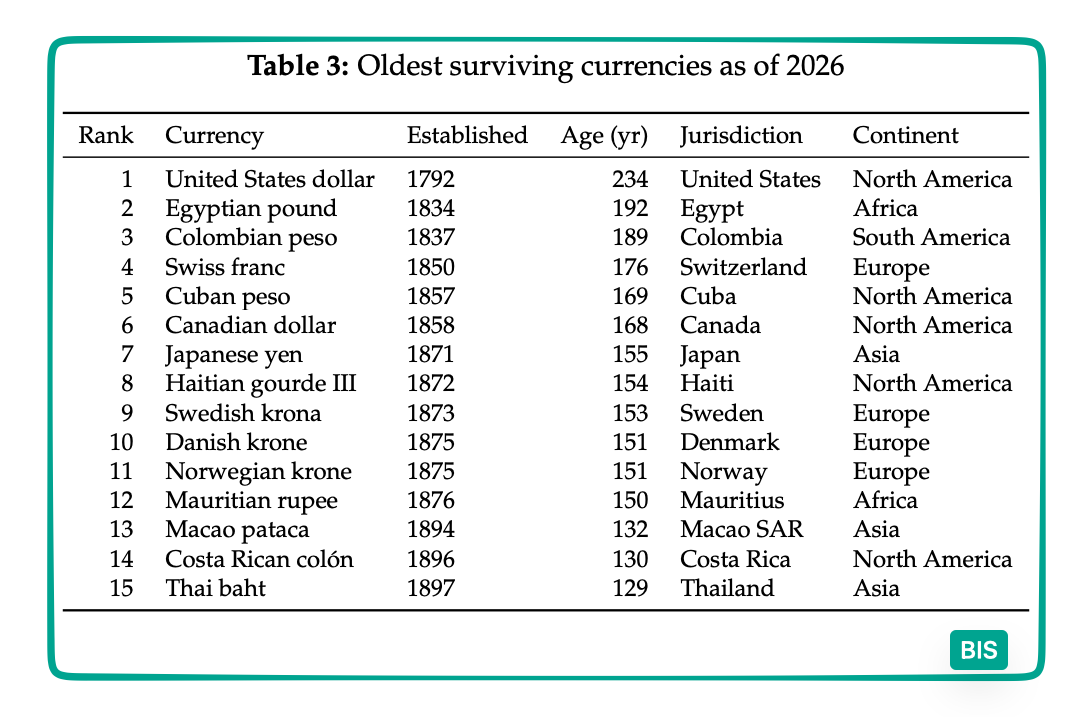
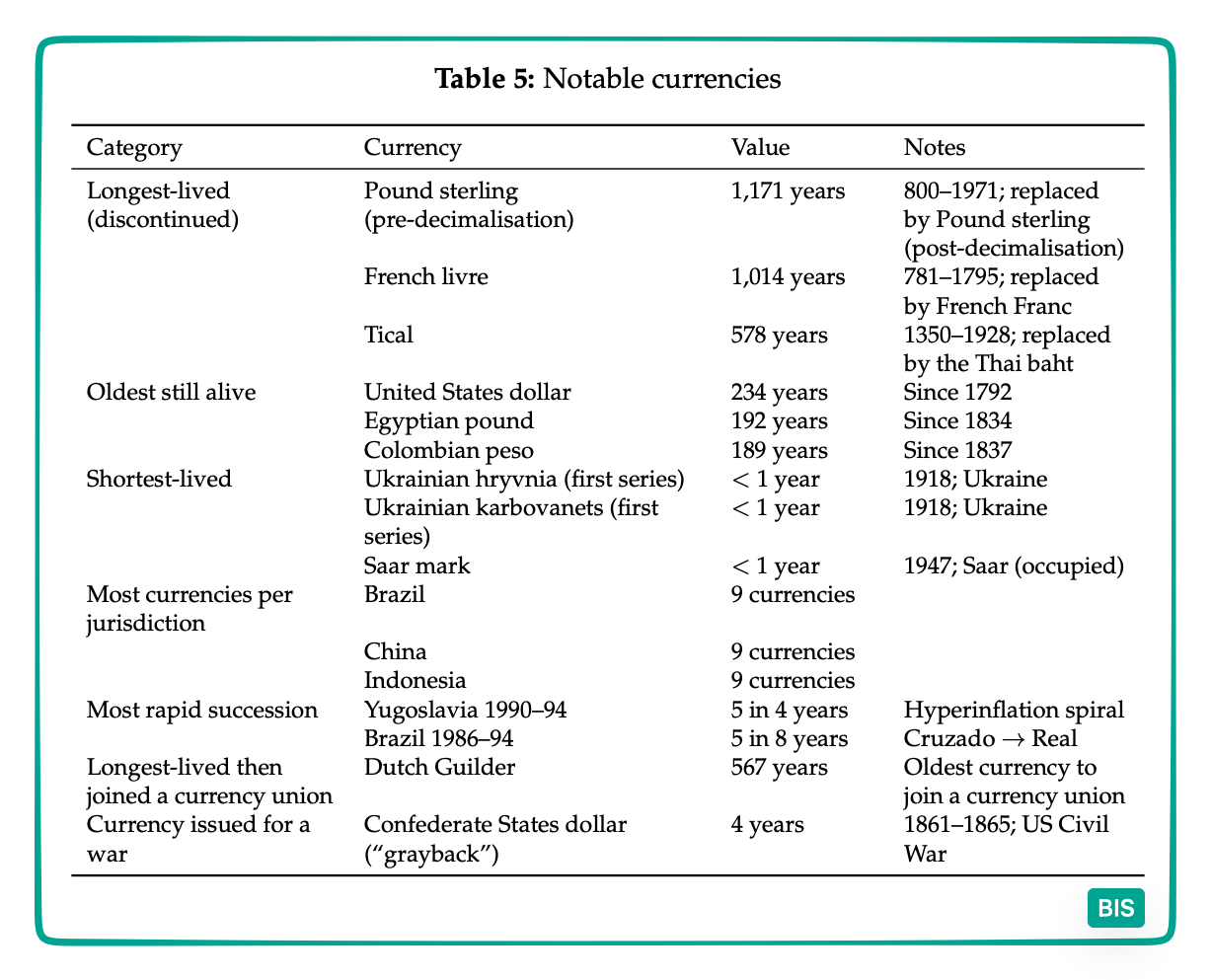
Although most currencies last for just a decade, their median lifespan is 33 years. By contrast, the United States tops our list with a whopping 234 years for the dollar’s longevity. Rather surprisingly, the Egyptian pound is #2:
5. Currency Counts
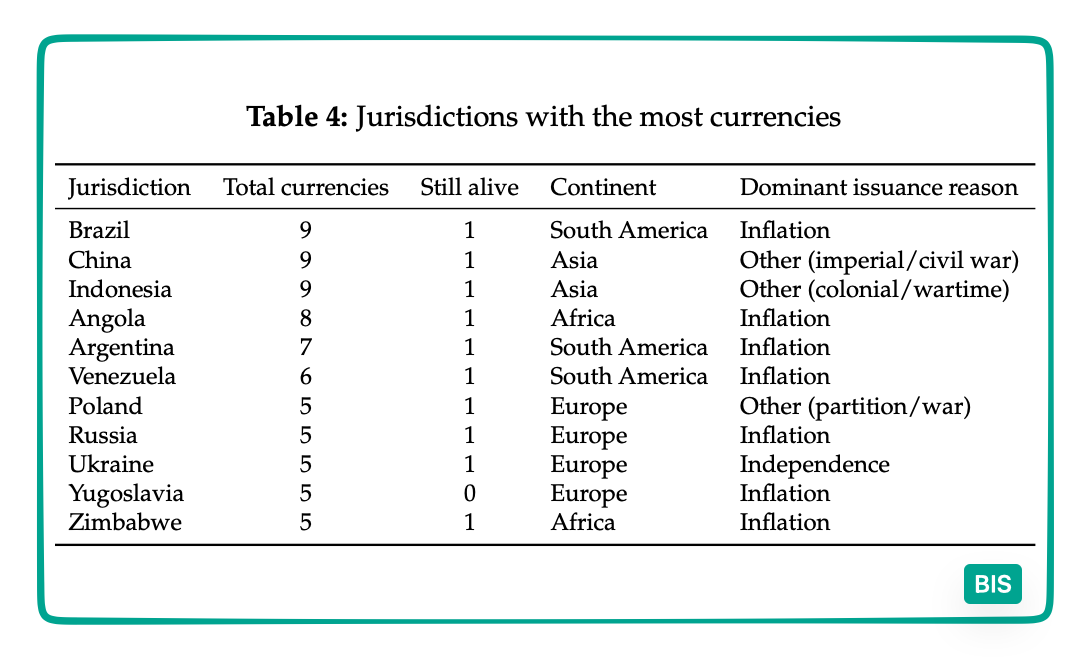
Regions with the most currency churn vary. Brazil, China, and Indonesia top our list:
6. Memorable Currencies
Like me, you might wonder about the Tical. Associated with Siam (now Thailand), it started as a commodity and then became a silver coin until the Thai baht replaced it:
Our Bottom Line: Money History
Rewinding to the origins of money, Adam Smith and many others told us that when barter became inadequate, we “invented” money. Emphasizing trade, they said we increasingly used money to facilitate exchange.
Not quite.
Based on anthropologists’ observations and not economists’ hypotheses, money and barter were friends, existing together, depending on the requisites of the situation. The money half was necessary as a unit of account.
My sources and more: Thanks to Timothy Taylor’s Conversable Economist for alerting me to the currency history paper. From there, we went to this David Graeber interview and his book, Debt: The First 5,000 Years. I especially appreciated the anthropological lens that he pointed at economics.