![econlifelogotrademarkedwebsitelogo[1]](/wp-content/uploads/2024/05/econlifelogotrademarkedwebsitelogo1.png#100878)


How Grade Inflation Can Harm a Student
March 24, 2026
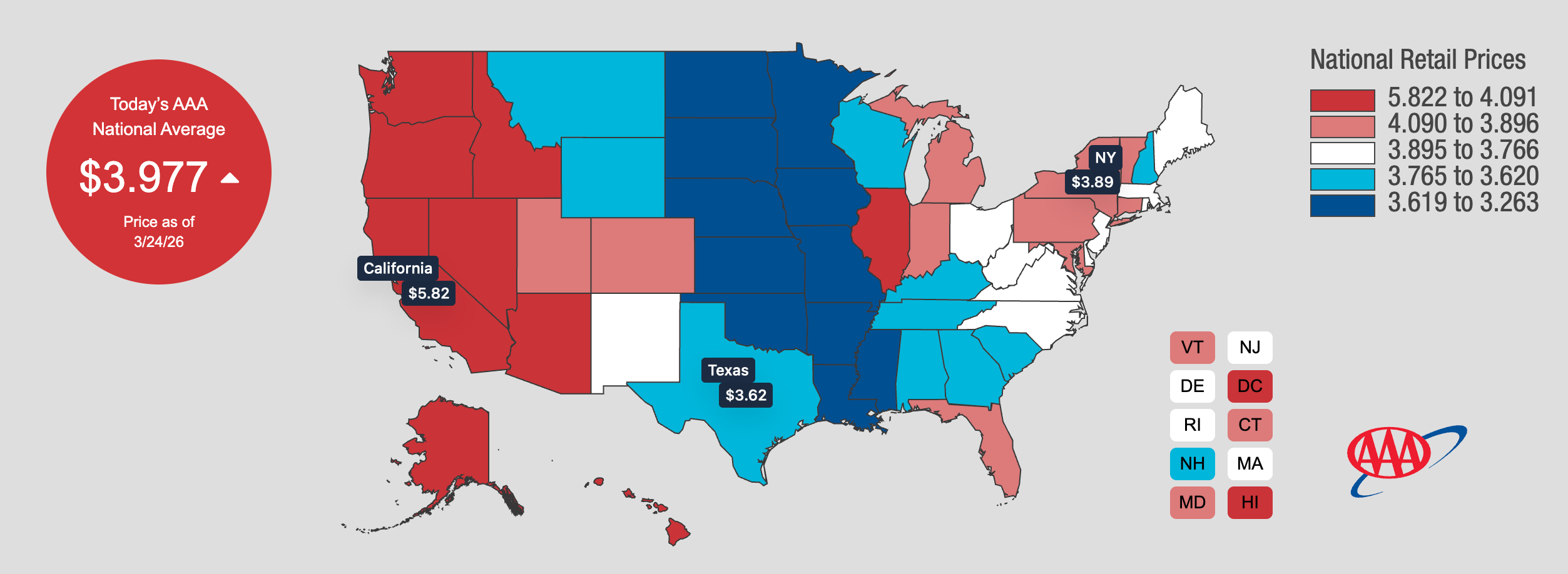
In a recent econlife, we noted that car shopping consumers are likely to consider an electric vehicle or a hybrid. Then, though, if gas prices continue ascending for several months, more of us will want to replace our SUV.
Seemingly small, a dollar change in gasoline prices could produce a massive shift in new and used car markets.
Gasoline Price Impact
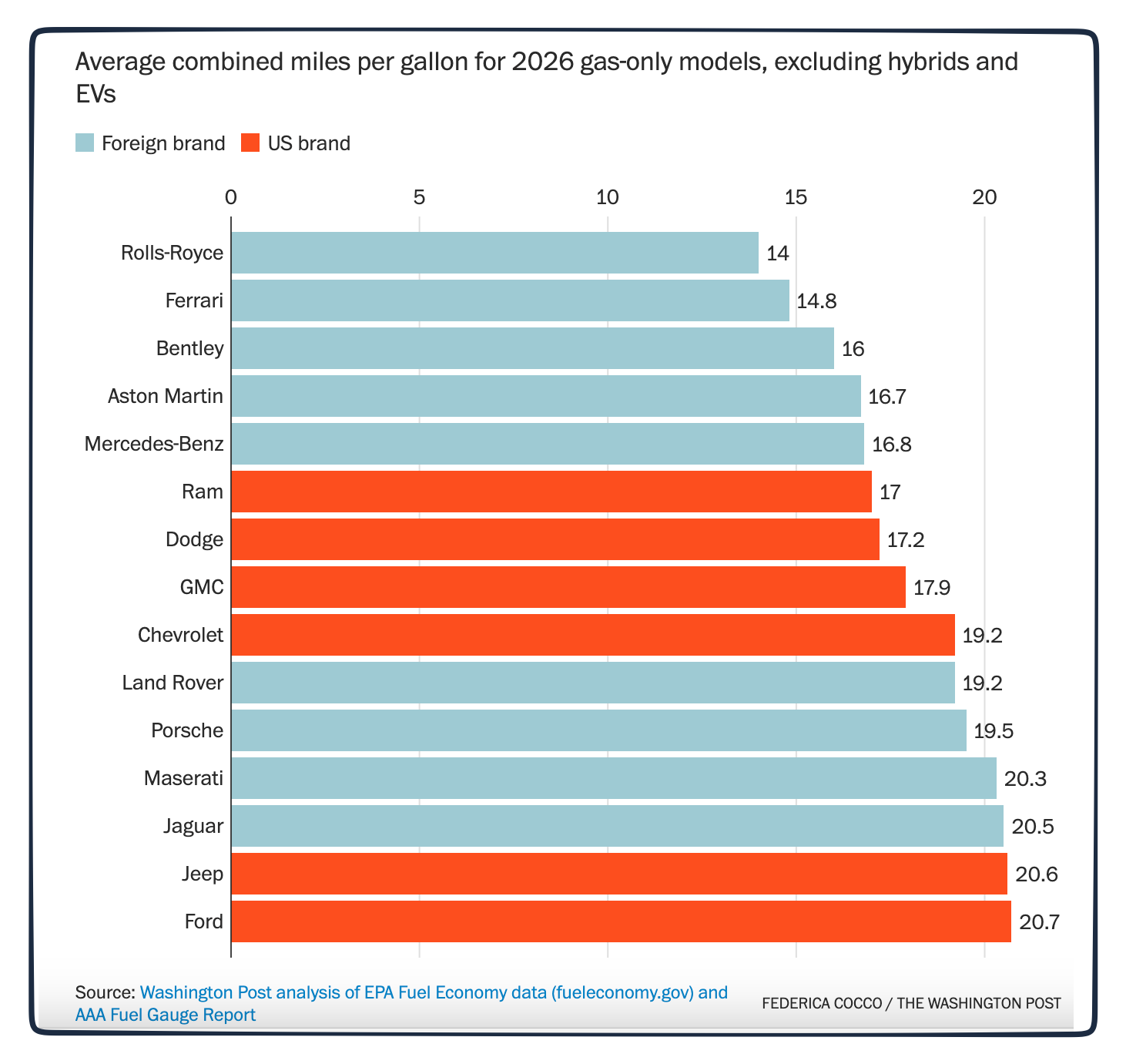
Ram, Dodge, and GMC owners have been the hardest hit by high gas prices. They will get little comfort from knowing that Rolls Royce drivers are suffering more at the pump:
As for how much, The Washington Post told us what the five best selling vehicles–Ford F-series, Chevy Silverado, Toyota RAV4, Honda CR-V, Ram Pickup– could cost us extra annually at the pump. While the Toyotas and Hondas, in $500 territory, were cheapest, the others took us closer to $800.
Knowing that gasoline prices go up like a rocket and down like a feather, our preference for a pickup or an SUV starts to sink.
Our Bottom Line: Demand
It all takes us to a change in demand. Defined as the different prices, that we are willing and able to pay for an item, our demand depends on six determinants. Ranging from income to substitute and complementary goods and services, those determinants move the entire demand curve. With the Iran War, we have soaring gasoline prices shrinking the utility of gas guzzling vehicles.
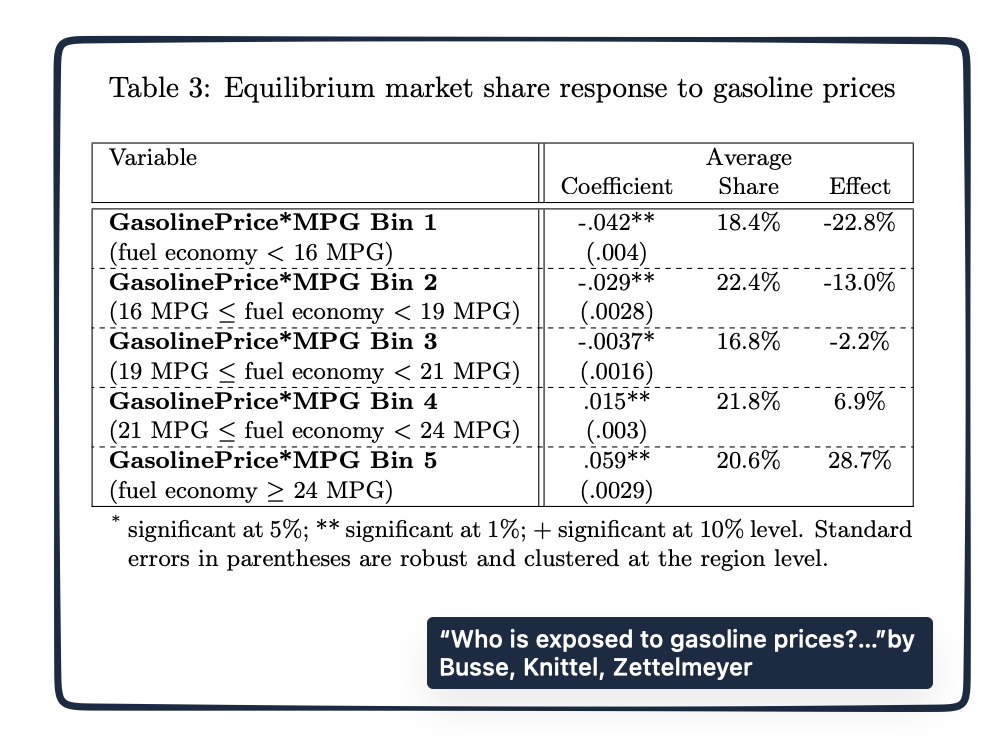
Scholars from Northwestern University and MIT quantified the change in demand in a 2012 study. Though dated, it relates to buyers’ contemporary behavior.
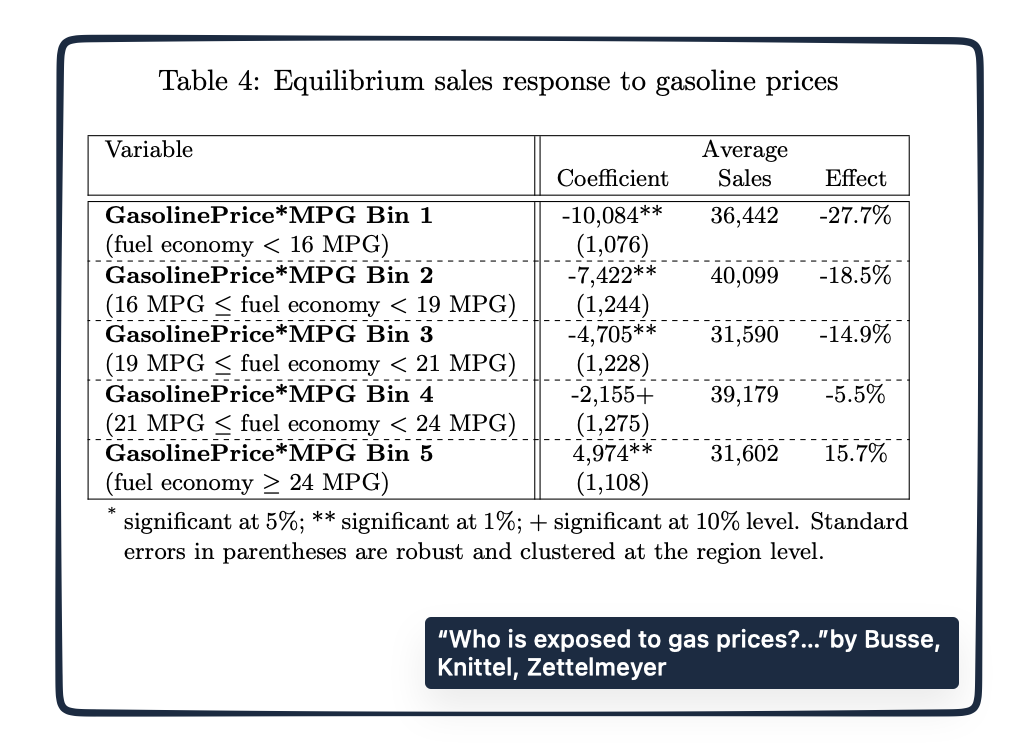
The study looked at market share, unit sales, and prices for new and used cars when gasoline prices went up. For a $1 increase in 2012 (equal to $1.44 today) market share reacted considerably. The quantity demanded of guzzlers went down by more than 22% while fuel economy vehicles saw a whopping 28.7% spike:
Market share:
Guzzler sales plunged:
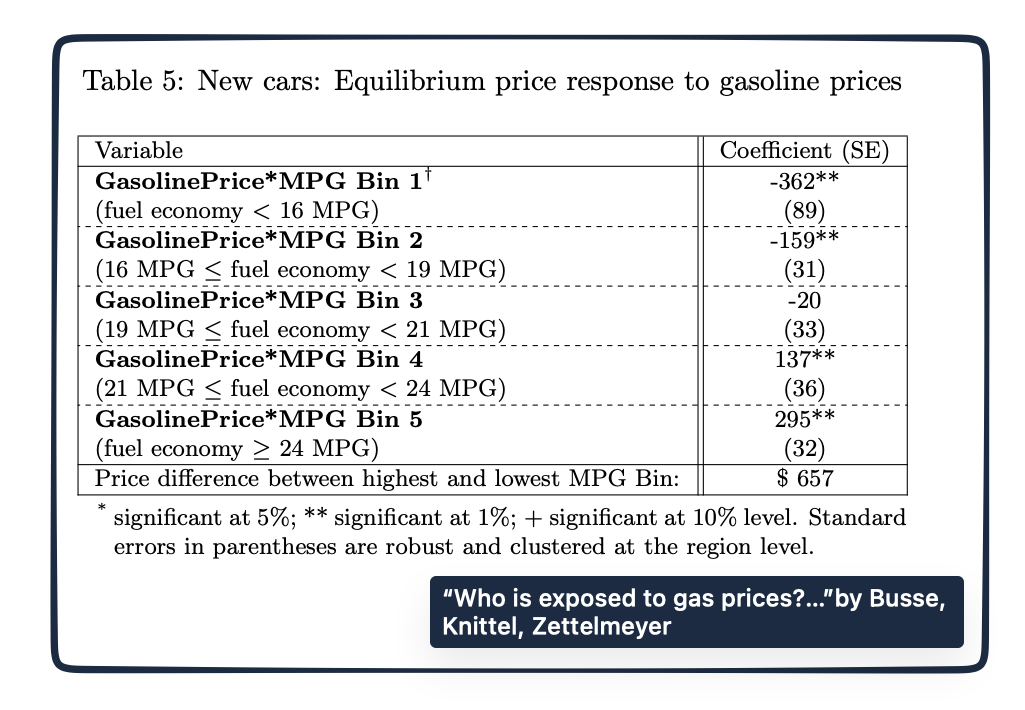
And guzzler prices went down while fuel economy vehicles became more expensive. The spread was $657:
Meanwhile, in used car markets, we have even more of a response. When gasoline prices rise by $1, gas guzzling used car prices fall by an average of $1474. Meanwhile, at the other end of the fuel economy scale, we have prices up by $922–a swing of almost $2400.
Taking the next step, our marginal gas expense becomes even more unsettling when we consider the non-auto tradeoffs. One gas buyer said he could not top off his tank because he needed some of the money for his mortgage payment. Others surely were thinking about grocery affordability.
My sources and more: While our car facts came from the Washington Post, Car and Driver was the ideal complement with the best sellers. Then, this paper provided the analysis.